Events
 Bikepack Adventures


Chris and his wife Sima have been using their Bert shoes for more than a year and are stoked to be sharing their experience using them.
If you want a lightweight, no‑fuss shoe for camp life, travel, and giving your feet a break after long days on the bike, the Bert shoes hit a really sweet spot. They pack down smaller than pretty much any shoe out there, slip on instantly, and feel amazing on tired, swollen feet. Unlike sandals, they don’t let gravel, pine needles, or mystery campsite debris sneak in, and they’ve got better grip than most ultralight camp shoes. They’re simple, comfy, and built by a brand that actually cares about doing things ethically.
Just keep your expectations in the right place: they’re not made for rocky terrain, big hikes, or anything technical. Cushioning is minimal, they’re not waterproof, and long‑term durability is still something to watch. But for everyday camp use, travel transitions, and those blissful après‑ride moments, they earn their spot in the bag every time.
Over the years, I’ve been on plenty of bikepacking trips where my obsession with packing light meant leaving camp shoes behind. And I don’t just mean overnighters. In 2020, I bikepacked 5,500 km from Vancouver to Whitehorse and eventually down to Winnipeg, without a single pair of shoes to slip into at camp or on rest days. Everywhere I went, I was clomping around in my MTB shoes. Not exactly stylish, and definitely not giving my feet the break they deserved.
I first came across Bert Shoes in 2024. They immediately caught my attention, but I wanted to understand what made them different. Bert markets their shoes as a transitional option for athletes, something reliable before and after your main activity. Unlike cycling shoes, trail runners, or hiking boots, Bert focuses on comfort, packability, and durability for low‑impact, high‑frequency use. This review takes a closer look at their construction, materials, performance, and real‑world practicality from both a technical and comfort perspective.
In 2025, I was fortunate to be introduced to Juliana, the owner of Bert Shoes, through mutual friends. She generously offered to sponsor the 3rd Edition of the Canadian Shield Bikepacking Summit and even sent my wife and me a couple of pairs for our upcoming bike trip to Europe.
Bert was born in Bogotá and inspired by Berta, a rescued street dog whose daily walks sparked the idea for a shoe that feels like a slipper but works anywhere. Designed with help from industrial designer Alberto Mantilla, Bert blends comfort, simplicity, and purpose. When Juliana decided to create an apres-sport shoe, she also decided to give back to the community and help fund spay/neuter programs supporting Colombia’s street dogs. The brand donates 5% of sales to this mission, as well as buying their rubber locally from communities that are in conflict zones. Their shoes have quickly become a favourite among cyclists for pre‑ and post‑ride comfort.
Bert markets itself as “the other shoe”, the one that supports all the moments surrounding your sport. Their footwear is designed to look good anywhere, pair with anything, and offer comfort without sacrificing practicality. Their ethos blends lifestyle, sport, and social responsibility, something that resonates with many of us in the outdoor and bikepacking communities.
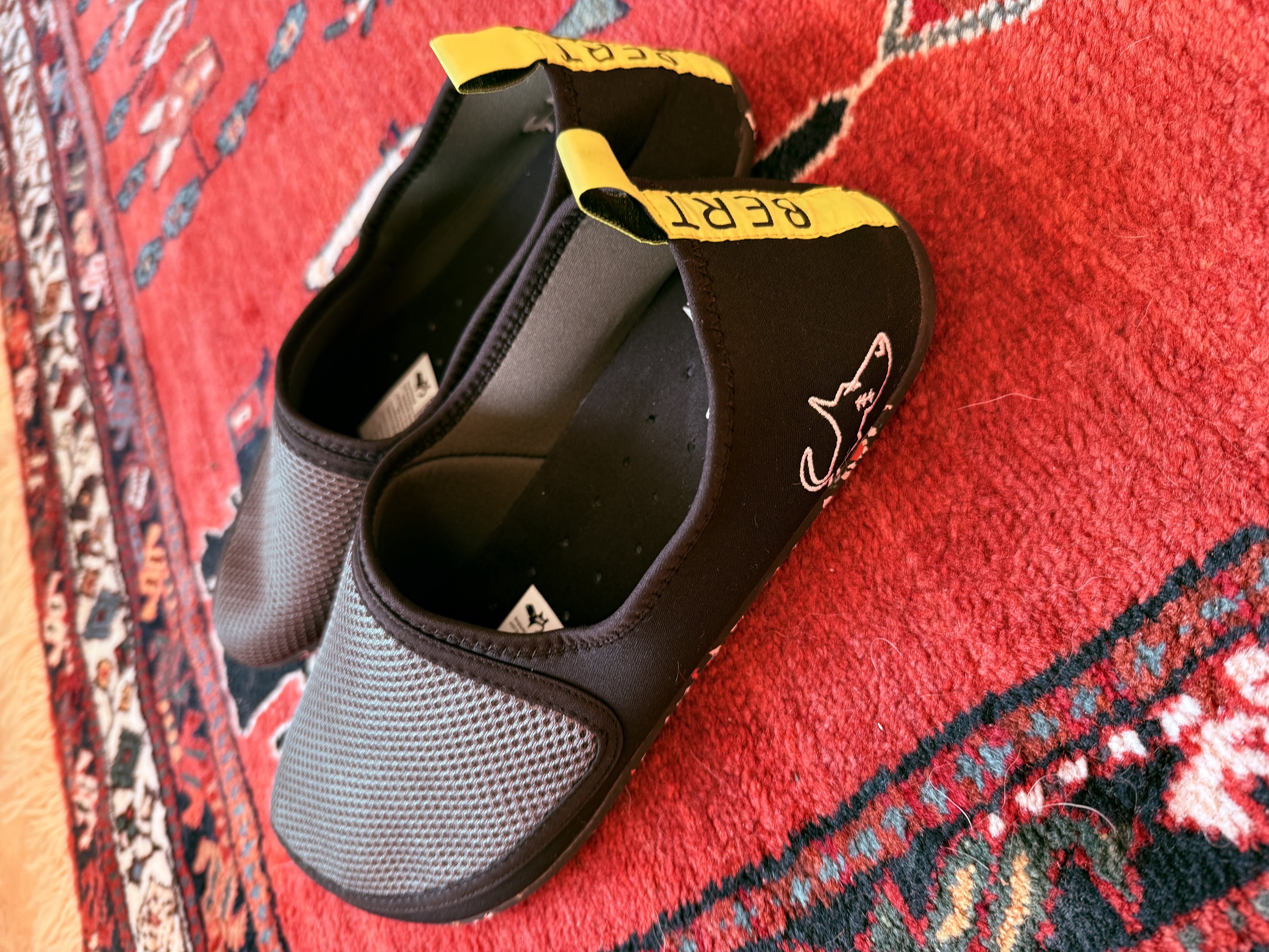
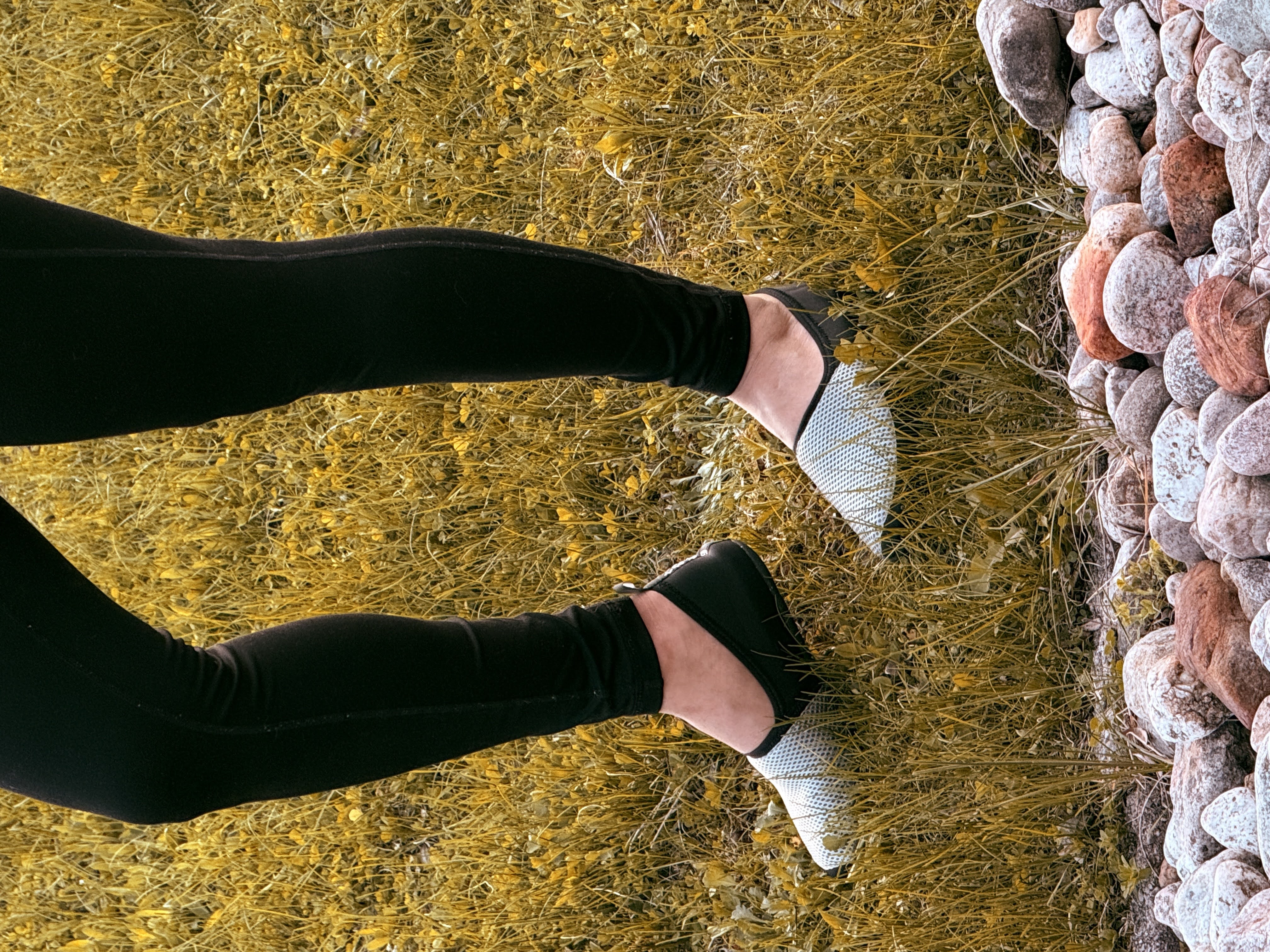
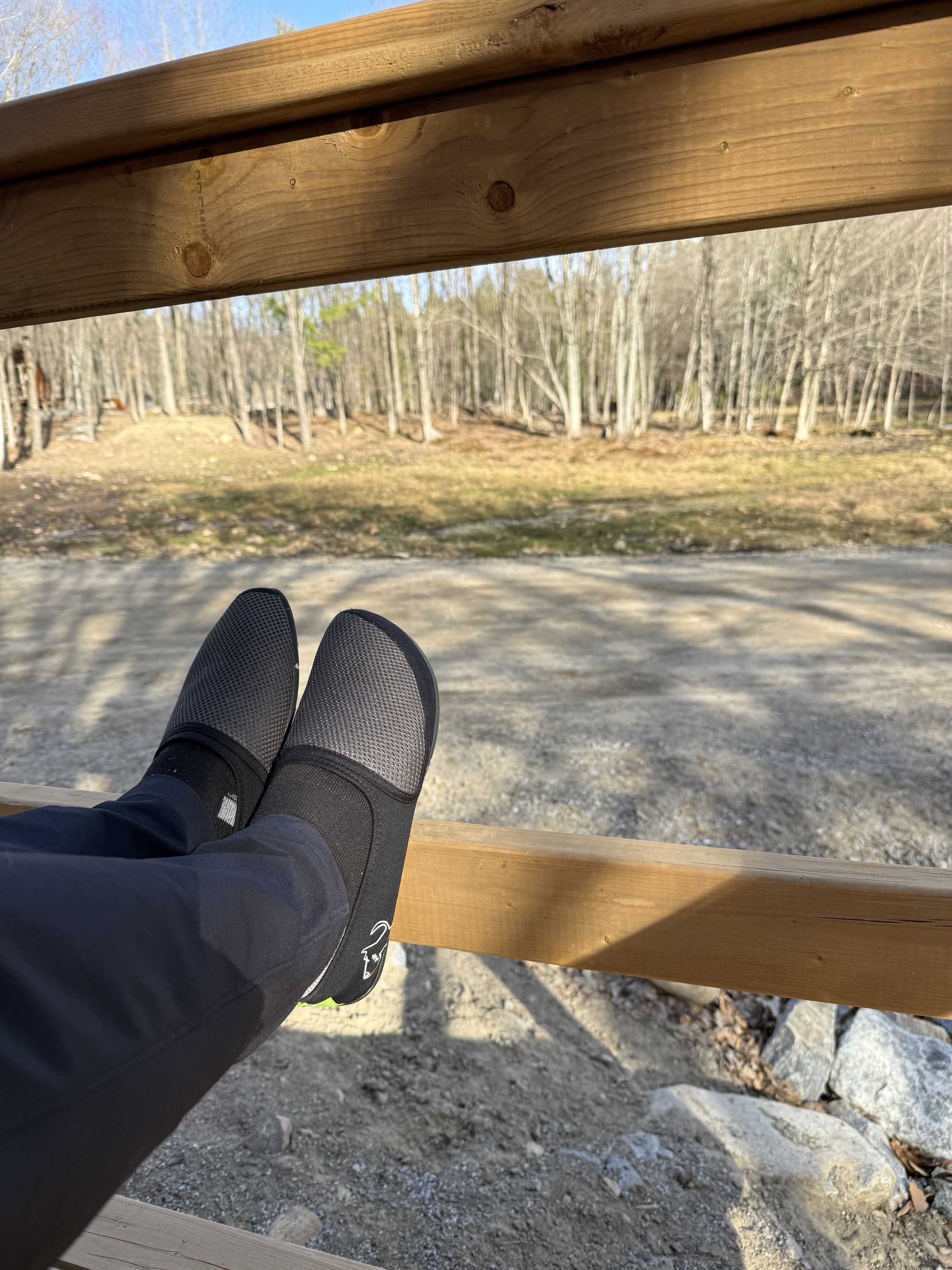
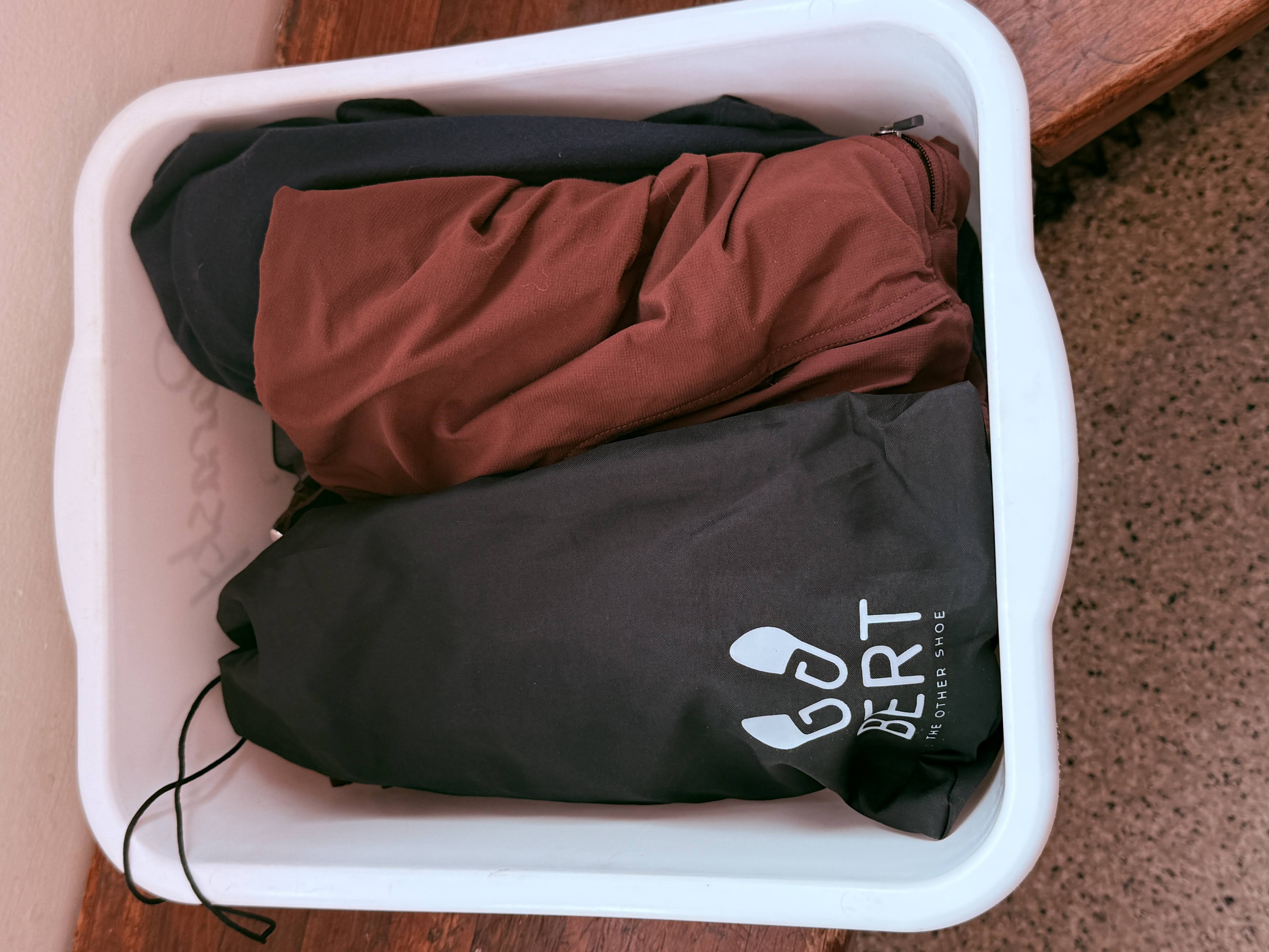
When my Bert shoes showed up in the mail, I couldn’t believe three pairs fit into such a small package. You might even notice in some of the pictures my wife is wearing a knit Bert shoe. This was a pre-release prototype that Juliana was kind enough to send my wife. It's pretty fortunate that my wife has the same size feet. They are also my wife's favourite pair of Berts, so I can imagine the newly released Bert knit shoes are really great in warmer climates. That pretty much sums up what they’re about: simple, compact, and easy to bring along. They’re about the size of loafers, with a clean, low‑key look and neutral colours that work with pretty much anything, whether its jeans, shorts, or whatever you’re wearing around camp. The slip‑on style makes them handy for travel or just giving your feet a break after a long day on the bike.
The first thing you notice is the neoprene upper, giving the shoe a bit of a water-shoe vibe, which, I know won’t be everyone’s favourite look. Putting them on, what immediately stood out was how comfortable they were. At under 400g for the pair, they’re light enough to pack without thinking about it, but not so light that they feel flimsy. They flatten down nicely, which makes them super easy to stuff into a bikepacking bag or strap on top. For such a minimal shoe, they felt good on my feet, and they stayed put without sliding around, which is always a relief when you’re ordering something you can’t try on first.
Overall, I was really happy with how they felt right out of the box and was excited to get them out on the trail to see how they’d hold up.
Bert shoes are the kind of thing you toss into your bag almost as an afterthought and then end up wearing constantly. They’re basically soft neoprene slippers with just enough structure to feel like real shoes, but none of the stiffness or fuss. The upper is stretchy and sock‑like, so slipping them on feels a bit like giving your feet a hug after a long day of pedalling. With hardly any seams, nothing rubs or digs in, even when your feet are a little cranky.
The elastic opening is one of those small details you don’t think about until you’re standing in camp, after a long day on the bike. They go on easy, come off easy, and don’t stretch out into floppy messes. And because they weigh next to nothing and pack down tiny, they easily disappear into a framebag without taking up precious space, or can be attached to the outside of bags with bungee cord.
Underfoot, the cushioning is just enough for wandering around camp, grabbing snacks from the gas station, or strolling through town. They’re not pretending to be running shoes, as they provide very little cushioning. They are simply a flexible shoe with a zero‑drop sole that lets your feet move normally again after being locked into stiff cycling shoes all day. It’s honestly a relief.
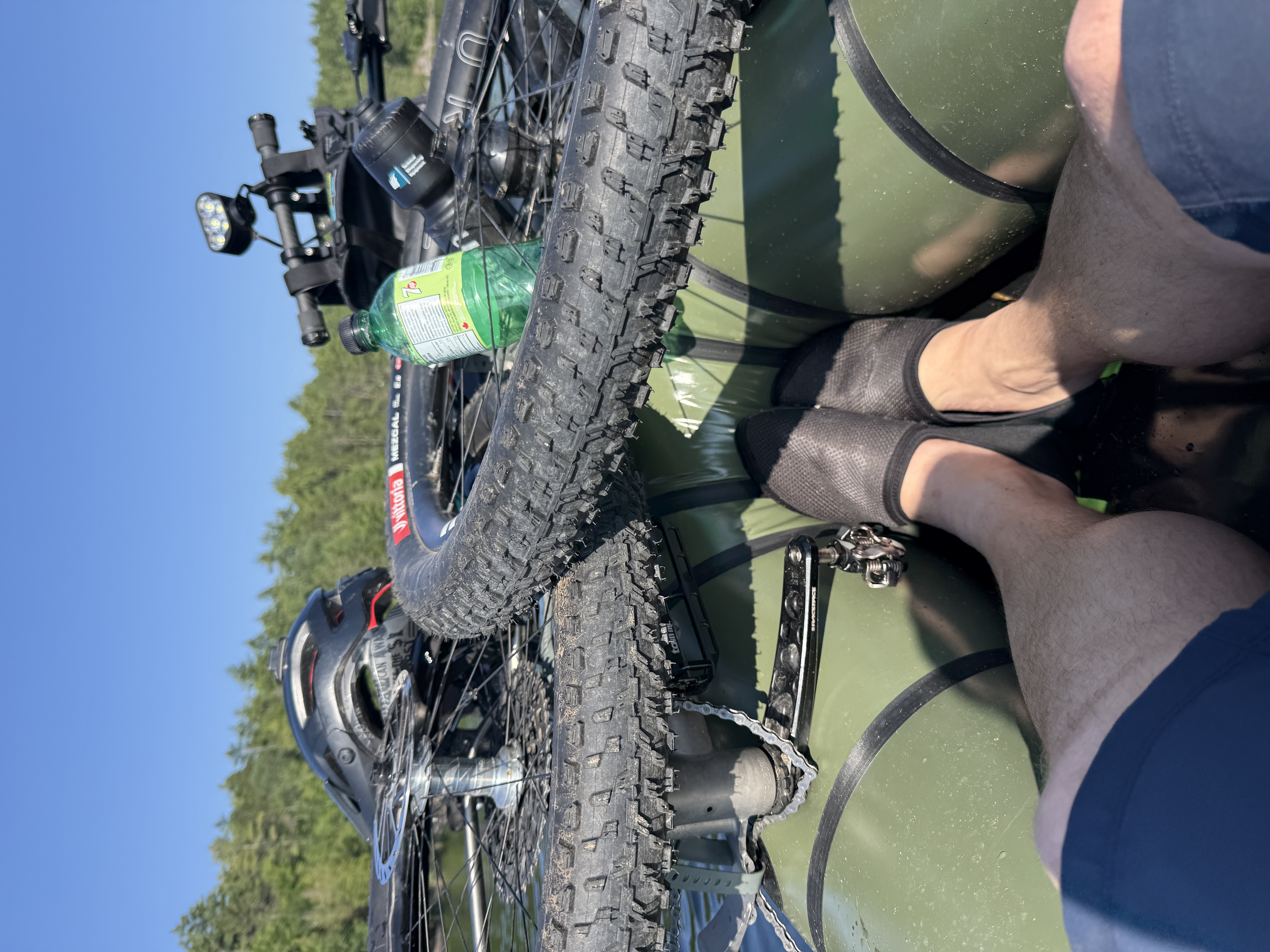
The outsole is made from recycled rubber with a shallow tread. Totally fine for pavement, gravel paths, and the usual campsite wandering. They are not meant to be used as a hiking shoe replacement or for hike-a-bike up a mountain. However, they do an amazing job as a bikerafting shoe, protecting the feet from rocks and sticks while getting the boat ready. They take a while to dry, but are comfortable even when wet.
Durability seems dialed in too. The stress points are double‑stitched, the overlays are bonded, and the heel has just enough structure to keep them from collapsing. Mine have been stuffed, squished, stepped on, and generally abused, and they’ve held up without complaint. You may notice in a couple of the pictures that there is a tear just above the toe. I recently tripped over a tent spike in the middle of the night, catching the spike with the top of the shoe. Kind of unfortunate, and sometime soon, I will do my best to darn the hole, so as to prevent further damage.
All in all, the design is simple in the best way, providing nothing flashy but just a shoe that makes sense for the way bikepackers actually live.
Sizing shoes online is always a bit of a gamble, but Bert gives you a decent starting point: wide feet, go up half a size; narrow feet, stick with your usual.
For me, that worked out perfectly. I’m normally a 45 in everyday shoes but often bump to a 46 for cycling shoes. With Bert, I stuck with my regular 45 and it was spot‑on. Barefoot, they feel relaxed and easy. With socks, they’re snug without squeezing too much.
And after a long day on the bike, when your feet are swollen and you’ve finally managed to kick off your cycling shoes, slipping into the Berts feels pretty amazing.
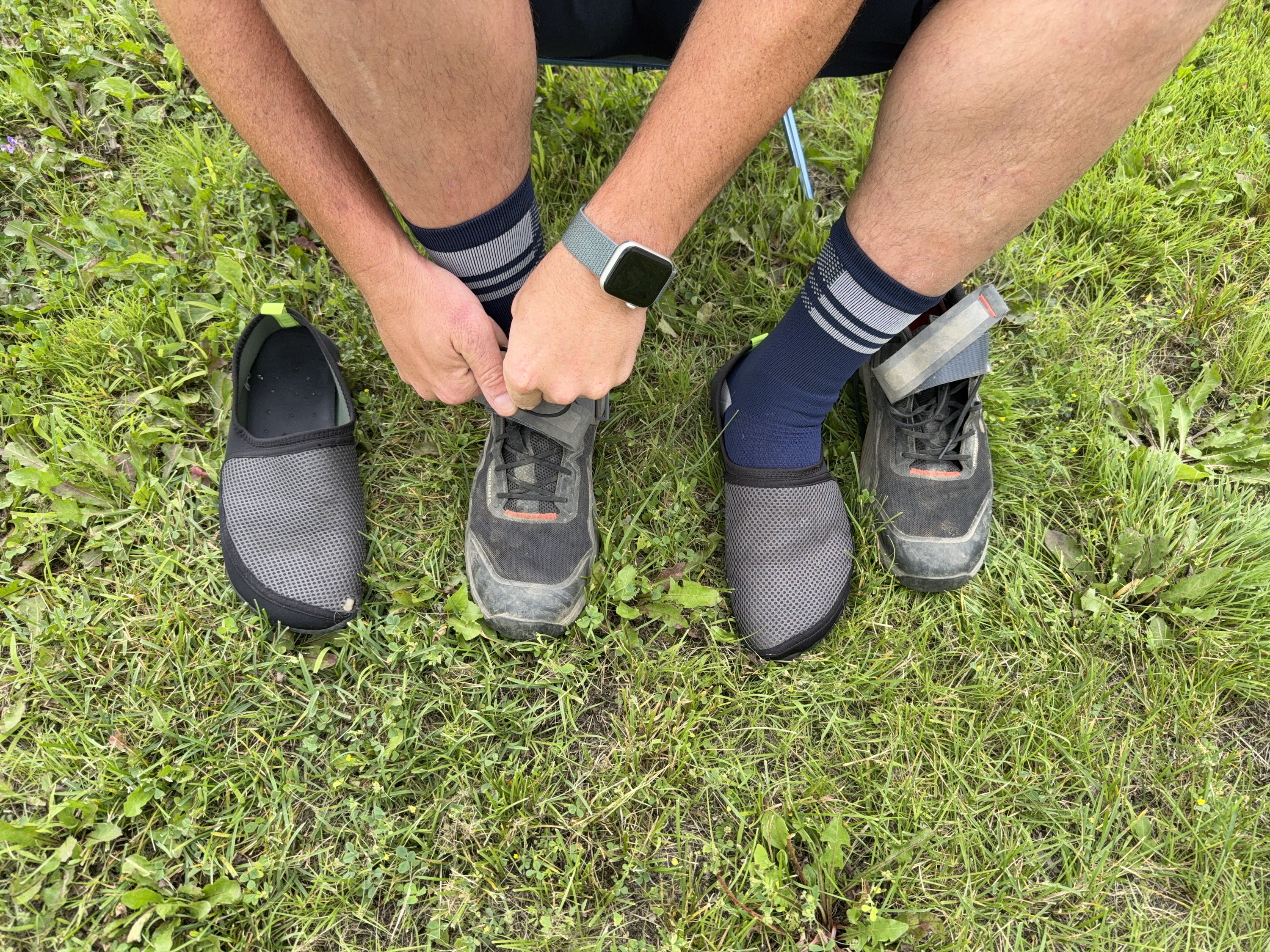
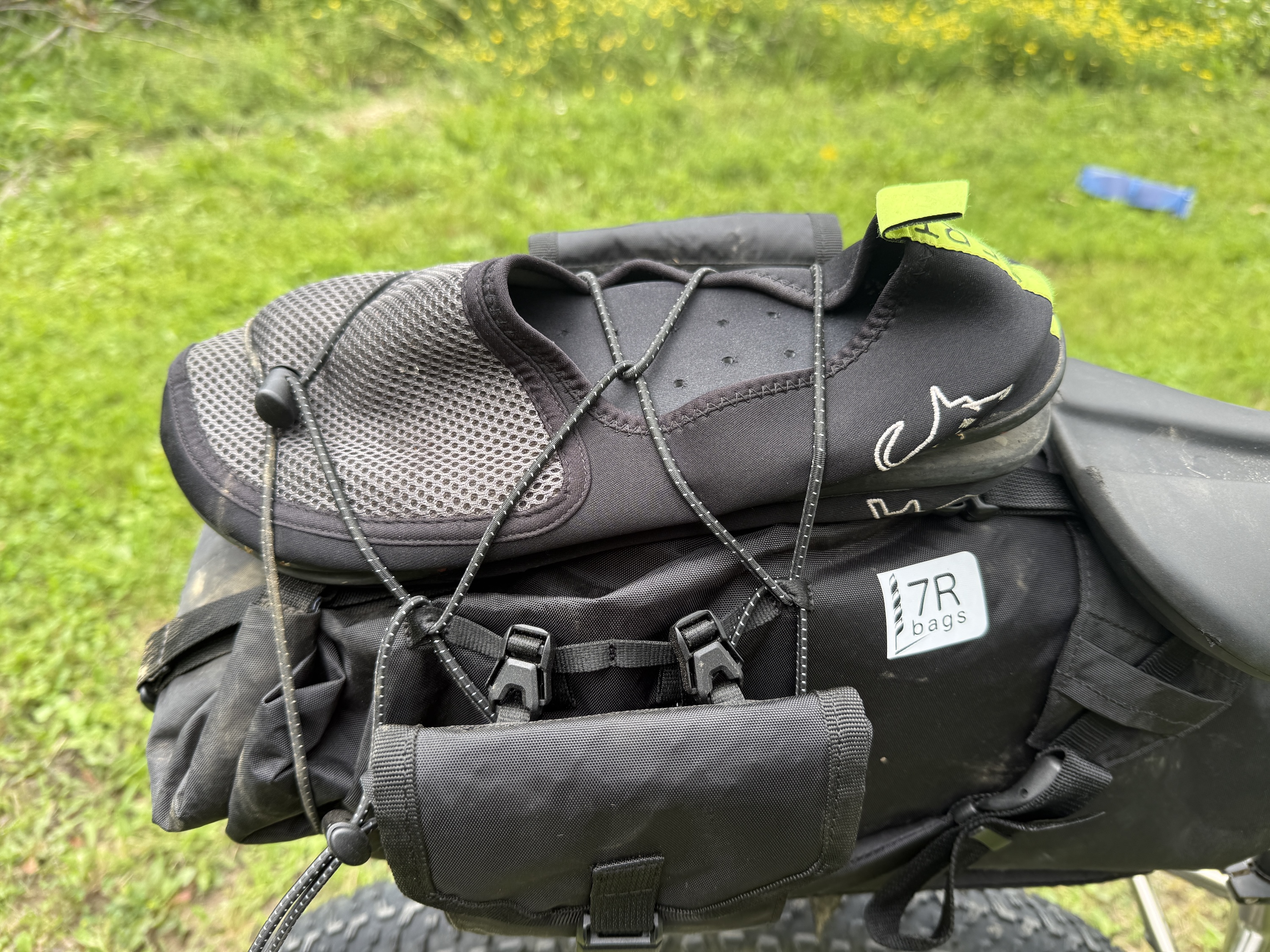
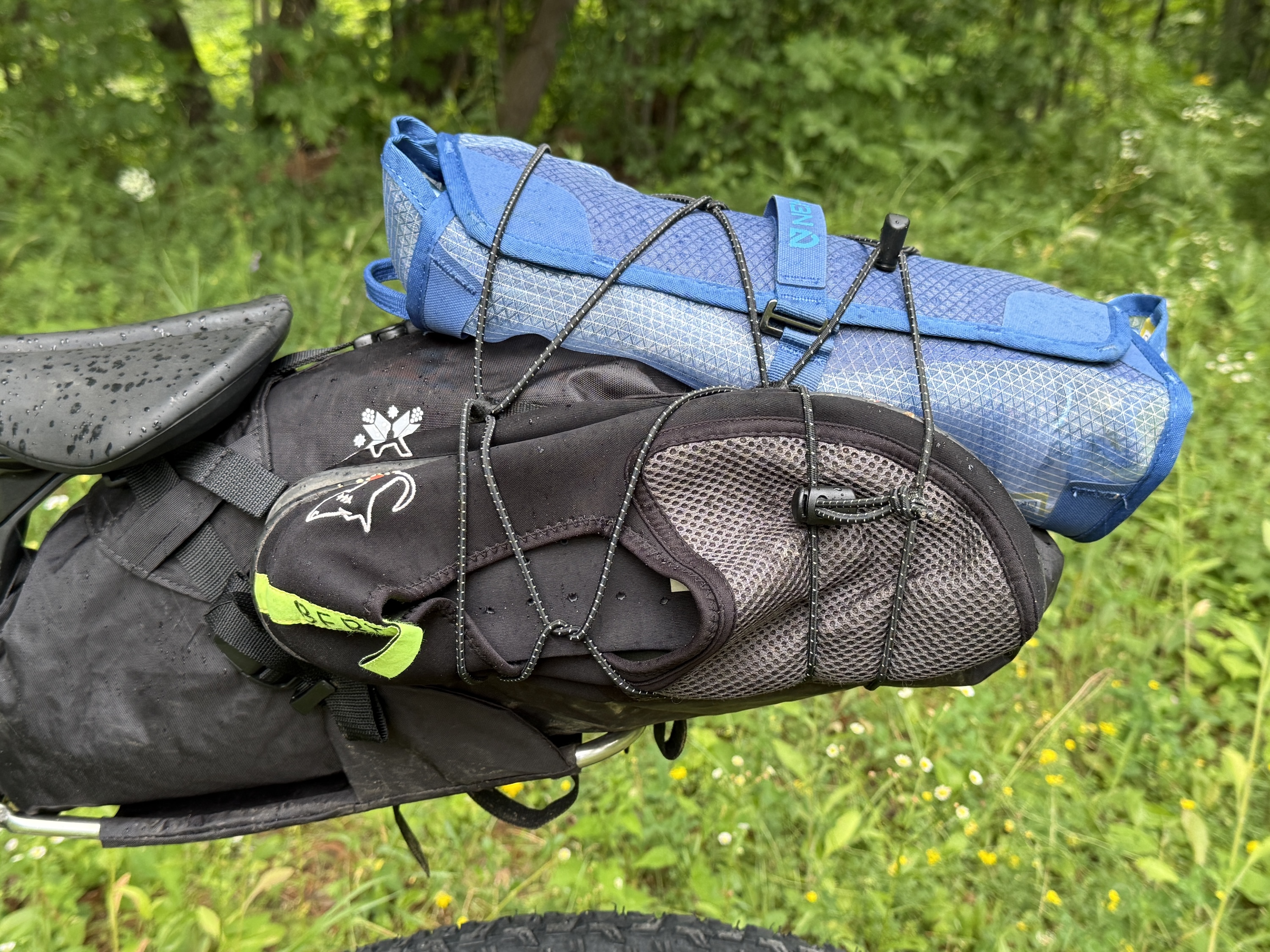
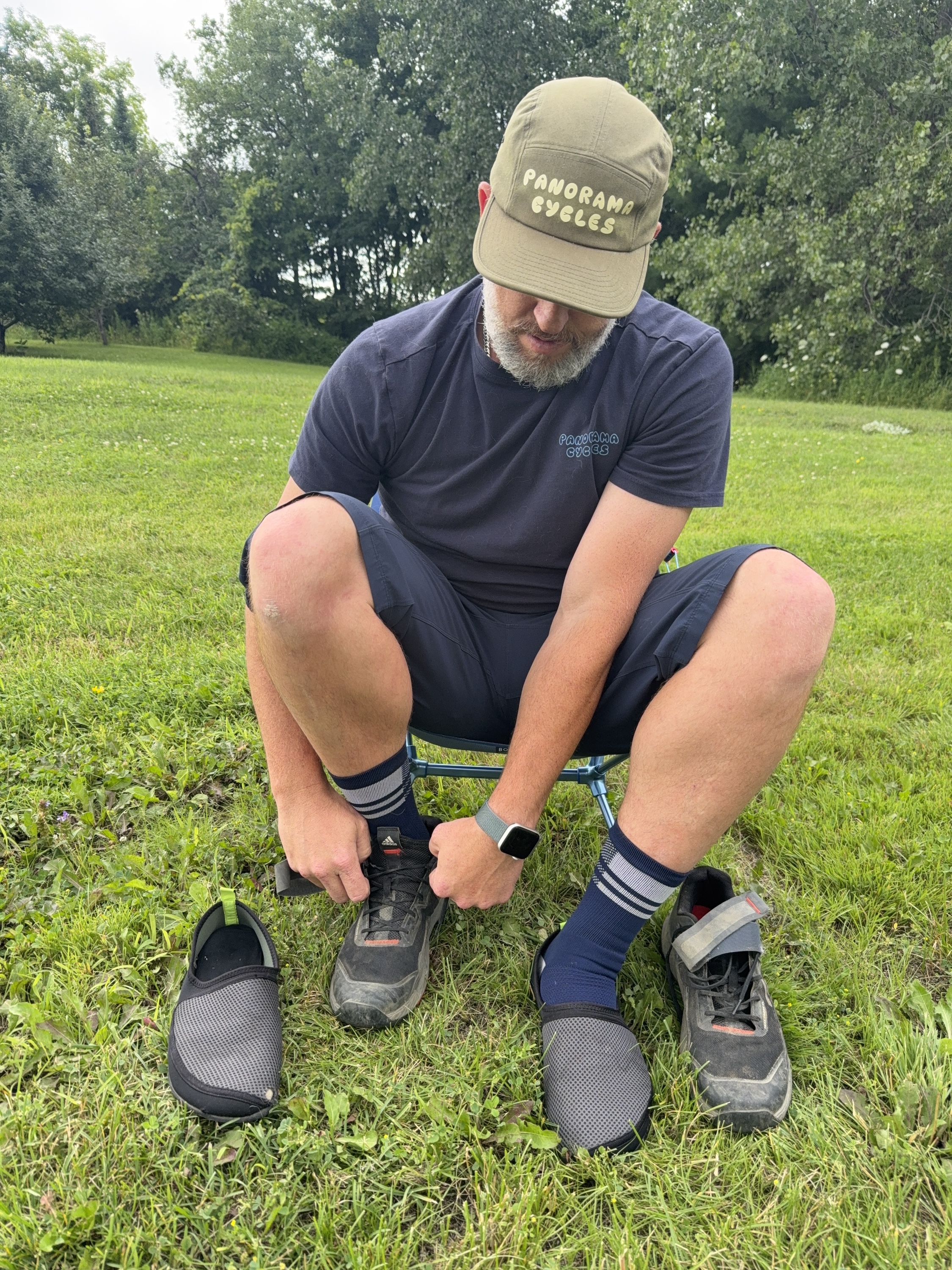
By the time I finally took my Berts on a proper bikepacking trip, they’d already lived a whole life. They’d been my “around the house” shoes, my “run out to the garage” shoes, my Dynamic Cyclist workout shoes, and even my “Japan travel shoes” because they take up basically no space. All that before they ever touched dirt.
Their first real overnighter was right after the Canadian Shield Bikepacking Summit, when I rode the Canadian Shield 250 during the Grand Depart. Honestly, I almost didn’t bring them, telling myself it was only one night, and I didn’t need extra shoes. But they tucked so easily into my rack‑top bag that I tossed them in anyway.
After a long weekend of Summit energy and a full evening of riding, my riding partner and I finally found a place to camp. I remember dropping my bike, setting up my bivy bag and then suddenly remembering: I brought the Berts. That moment of peeling off the MTB shoes from my tired feet and sliding into something soft was pure relief. It has became something I've looked forward to on every overnighter since.
Then came summer 2025. My wife, daughter, and I threw together a last‑minute trip to Europe to visit some friends and ride bikes through Belgium and the Netherlands, just keeping things simple. I ran flat pedals with running shoes and brought the Berts as a backup pair of shoes. They ended up doing a bit of everything on and off the bike. They were the perfect post-beach shoe, aka, “my feet are still damp, but we need to get moving”. Wipe off the sand, slide them on, and away you go. Easy.
My feet tend to run hot, so I usually wear thin socks to keep the neoprene from sticking. Over the three‑week trip, I often wore them for market runs, hotel wandering, playing outside with my daughter, and even a few short rides. By the time we were flying home from Paris, my running shoes were basically disintegrating, so I tossed them in an airport trash can and wore the Berts all the way home.
Just to be clear: Bert shoes are great at what they were designed to do, but they’re not trying to be everything. They’re perfect for commuting, camp life, easy walking, bikerafting and slipping on before or after a ride. They’re not built for running, technical hikes, big hike‑a‑bikes, or slogging through mud where you need real grip and protection. They sit in that sweet spot between performance footwear and casual shoes, ideal as après‑bike footwear or for water crossings when you want to keep your cycling shoes dry and avoid slicing your feet on river rocks.
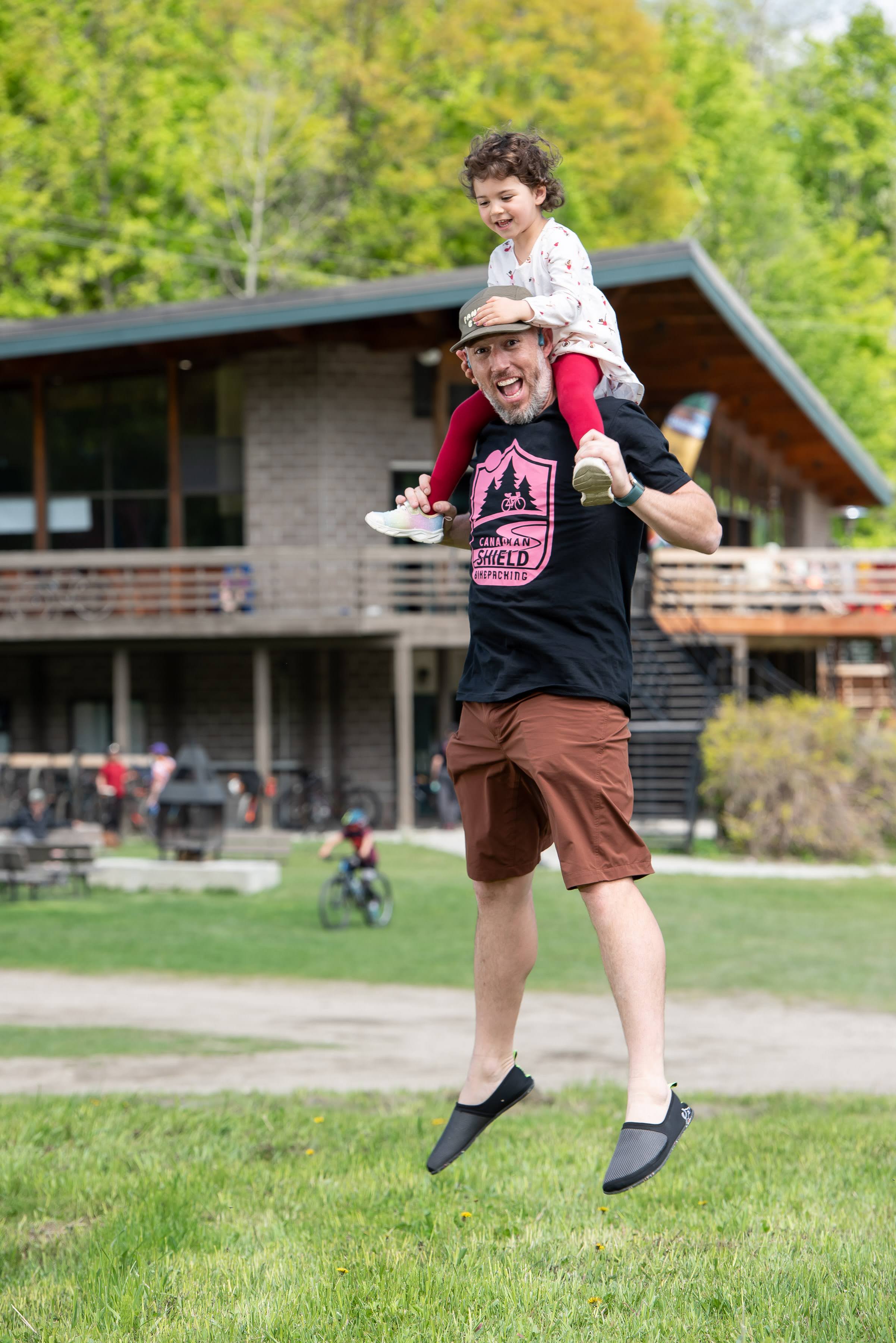
After a couple season of stuffing the Berts into bags, dragging them through airports, kicking around campsites, and slipping them on after long days in the saddle, I’ve come to appreciate just how perfectly they hit that sweet spot. They’re the kind of shoe you don’t overthink; lightweight, no‑fuss, and always ready when your feet need a break. Whether it’s après‑ride recovery, wandering around a campground, or tossing them in your bag for travel, they just make life easier. When I'm at home, they sit in the entryway with all the other shoes, ready to go at a moment's notice.
There are plenty of sandal options out there for camp shoes, some of which pack down even smaller than Berts. But sandals come with their own quirks. Many of them take up lots of space (think Crocs), they flop around and they love to collect little rocks that somehow always wedge themselves under your arch at the worst possible moment. The Berts avoid all of that. They pack down relatively small, they stay put on your feet, and they keep out the gravel, pine needles, and mystery campsite debris that always seems to find its way into open footwear.
They’re not trying to replace your running shoes or your hiking boots. They’re not built for big missions or rugged terrain. But for those in‑between moments, the quiet parts of a trip, the times when your feet just want something soft and simple, they’re exactly the right tool for the job.
If you’re the kind of rider who likes to keep things light, keep things simple, and give your feet a little love at the end of the day, the Berts earn their spot in the bag every single time. The best part is that they are not super expensive, coming in at $115 CAD or $80 USD. For the amount of times you will find yourself reaching for your Berts in just about every aspect of life, their cost is a justifiable expense.
Chris and his wife Sima have been using their Bert shoes for more than a year and are stoked to be sharing their experience using them.
Over the years, I’ve been on plenty of bikepacking trips where my obsession with packing light meant leaving camp shoes behind. And I don’t just mean overnighters. In 2020, I bikepacked 5,500 km from Vancouver to Whitehorse and eventually down to Winnipeg, without a single pair of shoes to slip into at camp or on rest days. Everywhere I went, I was clomping around in my MTB shoes. Not exactly stylish, and definitely not giving my feet the break they deserved.
I first came across Bert Shoes in 2024. They immediately caught my attention, but I wanted to understand what made them different. Bert markets their shoes as a transitional option for athletes, something reliable before and after your main activity. Unlike cycling shoes, trail runners, or hiking boots, Bert focuses on comfort, packability, and durability for low‑impact, high‑frequency use. This review takes a closer look at their construction, materials, performance, and real‑world practicality from both a technical and comfort perspective.
In 2025, I was fortunate to be introduced to Juliana, the owner of Bert Shoes, through mutual friends. She generously offered to sponsor the 3rd Edition of the Canadian Shield Bikepacking Summit and even sent my wife and me a couple of pairs for our upcoming bike trip to Europe.
Bert was born in Bogotá and inspired by Berta, a rescued street dog whose daily walks sparked the idea for a shoe that feels like a slipper but works anywhere. Designed with help from industrial designer Alberto Mantilla, Bert blends comfort, simplicity, and purpose. When Juliana decided to create an apres-sport shoe, she also decided to give back to the community and help fund spay/neuter programs supporting Colombia’s street dogs. The brand donates 5% of sales to this mission, as well as buying their rubber locally from communities that are in conflict zones. Their shoes have quickly become a favourite among cyclists for pre‑ and post‑ride comfort.
Bert markets itself as “the other shoe”, the one that supports all the moments surrounding your sport. Their footwear is designed to look good anywhere, pair with anything, and offer comfort without sacrificing practicality. Their ethos blends lifestyle, sport, and social responsibility, something that resonates with many of us in the outdoor and bikepacking communities.
When my Bert shoes showed up in the mail, I couldn’t believe three pairs fit into such a small package. You might even notice in some of the pictures my wife is wearing a knit Bert shoe. This was a pre-release prototype that Juliana was kind enough to send my wife. It's pretty fortunate that my wife has the same size feet. They are also my wife's favourite pair of Berts, so I can imagine the newly released Bert knit shoes are really great in warmer climates. That pretty much sums up what they’re about: simple, compact, and easy to bring along. They’re about the size of loafers, with a clean, low‑key look and neutral colours that work with pretty much anything, whether its jeans, shorts, or whatever you’re wearing around camp. The slip‑on style makes them handy for travel or just giving your feet a break after a long day on the bike.
The first thing you notice is the neoprene upper, giving the shoe a bit of a water-shoe vibe, which, I know won’t be everyone’s favourite look. Putting them on, what immediately stood out was how comfortable they were. At under 400g for the pair, they’re light enough to pack without thinking about it, but not so light that they feel flimsy. They flatten down nicely, which makes them super easy to stuff into a bikepacking bag or strap on top. For such a minimal shoe, they felt good on my feet, and they stayed put without sliding around, which is always a relief when you’re ordering something you can’t try on first.
Overall, I was really happy with how they felt right out of the box and was excited to get them out on the trail to see how they’d hold up.
Bert shoes are the kind of thing you toss into your bag almost as an afterthought and then end up wearing constantly. They’re basically soft neoprene slippers with just enough structure to feel like real shoes, but none of the stiffness or fuss. The upper is stretchy and sock‑like, so slipping them on feels a bit like giving your feet a hug after a long day of pedalling. With hardly any seams, nothing rubs or digs in, even when your feet are a little cranky.
The elastic opening is one of those small details you don’t think about until you’re standing in camp, after a long day on the bike. They go on easy, come off easy, and don’t stretch out into floppy messes. And because they weigh next to nothing and pack down tiny, they easily disappear into a framebag without taking up precious space, or can be attached to the outside of bags with bungee cord.
Underfoot, the cushioning is just enough for wandering around camp, grabbing snacks from the gas station, or strolling through town. They’re not pretending to be running shoes, as they provide very little cushioning. They are simply a flexible shoe with a zero‑drop sole that lets your feet move normally again after being locked into stiff cycling shoes all day. It’s honestly a relief.
The outsole is made from recycled rubber with a shallow tread. Totally fine for pavement, gravel paths, and the usual campsite wandering. They are not meant to be used as a hiking shoe replacement or for hike-a-bike up a mountain. However, they do an amazing job as a bikerafting shoe, protecting the feet from rocks and sticks while getting the boat ready. They take a while to dry, but are comfortable even when wet.
Durability seems dialed in too. The stress points are double‑stitched, the overlays are bonded, and the heel has just enough structure to keep them from collapsing. Mine have been stuffed, squished, stepped on, and generally abused, and they’ve held up without complaint. You may notice in a couple of the pictures that there is a tear just above the toe. I recently tripped over a tent spike in the middle of the night, catching the spike with the top of the shoe. Kind of unfortunate, and sometime soon, I will do my best to darn the hole, so as to prevent further damage.
All in all, the design is simple in the best way, providing nothing flashy but just a shoe that makes sense for the way bikepackers actually live.
Sizing shoes online is always a bit of a gamble, but Bert gives you a decent starting point: wide feet, go up half a size; narrow feet, stick with your usual.
For me, that worked out perfectly. I’m normally a 45 in everyday shoes but often bump to a 46 for cycling shoes. With Bert, I stuck with my regular 45 and it was spot‑on. Barefoot, they feel relaxed and easy. With socks, they’re snug without squeezing too much.
And after a long day on the bike, when your feet are swollen and you’ve finally managed to kick off your cycling shoes, slipping into the Berts feels pretty amazing.
By the time I finally took my Berts on a proper bikepacking trip, they’d already lived a whole life. They’d been my “around the house” shoes, my “run out to the garage” shoes, my Dynamic Cyclist workout shoes, and even my “Japan travel shoes” because they take up basically no space. All that before they ever touched dirt.
Their first real overnighter was right after the Canadian Shield Bikepacking Summit, when I rode the Canadian Shield 250 during the Grand Depart. Honestly, I almost didn’t bring them, telling myself it was only one night, and I didn’t need extra shoes. But they tucked so easily into my rack‑top bag that I tossed them in anyway.
After a long weekend of Summit energy and a full evening of riding, my riding partner and I finally found a place to camp. I remember dropping my bike, setting up my bivy bag and then suddenly remembering: I brought the Berts. That moment of peeling off the MTB shoes from my tired feet and sliding into something soft was pure relief. It has became something I've looked forward to on every overnighter since.
Then came summer 2025. My wife, daughter, and I threw together a last‑minute trip to Europe to visit some friends and ride bikes through Belgium and the Netherlands, just keeping things simple. I ran flat pedals with running shoes and brought the Berts as a backup pair of shoes. They ended up doing a bit of everything on and off the bike. They were the perfect post-beach shoe, aka, “my feet are still damp, but we need to get moving”. Wipe off the sand, slide them on, and away you go. Easy.
My feet tend to run hot, so I usually wear thin socks to keep the neoprene from sticking. Over the three‑week trip, I often wore them for market runs, hotel wandering, playing outside with my daughter, and even a few short rides. By the time we were flying home from Paris, my running shoes were basically disintegrating, so I tossed them in an airport trash can and wore the Berts all the way home.
Just to be clear: Bert shoes are great at what they were designed to do, but they’re not trying to be everything. They’re perfect for commuting, camp life, easy walking, bikerafting and slipping on before or after a ride. They’re not built for running, technical hikes, big hike‑a‑bikes, or slogging through mud where you need real grip and protection. They sit in that sweet spot between performance footwear and casual shoes, ideal as après‑bike footwear or for water crossings when you want to keep your cycling shoes dry and avoid slicing your feet on river rocks.
After a couple season of stuffing the Berts into bags, dragging them through airports, kicking around campsites, and slipping them on after long days in the saddle, I’ve come to appreciate just how perfectly they hit that sweet spot. They’re the kind of shoe you don’t overthink; lightweight, no‑fuss, and always ready when your feet need a break. Whether it’s après‑ride recovery, wandering around a campground, or tossing them in your bag for travel, they just make life easier. When I'm at home, they sit in the entryway with all the other shoes, ready to go at a moment's notice.
There are plenty of sandal options out there for camp shoes, some of which pack down even smaller than Berts. But sandals come with their own quirks. Many of them take up lots of space (think Crocs), they flop around and they love to collect little rocks that somehow always wedge themselves under your arch at the worst possible moment. The Berts avoid all of that. They pack down relatively small, they stay put on your feet, and they keep out the gravel, pine needles, and mystery campsite debris that always seems to find its way into open footwear.
They’re not trying to replace your running shoes or your hiking boots. They’re not built for big missions or rugged terrain. But for those in‑between moments, the quiet parts of a trip, the times when your feet just want something soft and simple, they’re exactly the right tool for the job.
If you’re the kind of rider who likes to keep things light, keep things simple, and give your feet a little love at the end of the day, the Berts earn their spot in the bag every single time. The best part is that they are not super expensive, coming in at $115 CAD or $80 USD. For the amount of times you will find yourself reaching for your Berts in just about every aspect of life, their cost is a justifiable expense.