Events
 Bikepack Adventures


In 2023, Chris picked up a used BarYak Handlebar System. After 2 years of use, and a few upgrades, he's finally found it a full-time home on one of the bikes in his stable. Be sure to read the long-term review to get the full scoop.
After extensive testing across multiple bikes and seasons, the BarYak Handlebar System has proven to be a versatile, high-quality cockpit solution for serious bikepackers. The CNC-machined Expedition SL and XL rails offer sleek integration and cable clearance, while the modular setup, including the Peregrine Armrests, Triple Crown mount, and Talon Waterproof Bag, creates a cohesive ecosystem that balances comfort, stability, and gear accessibility. Though slightly heavier than traditional aerobars, the added functionality and ergonomic gains make it a worthwhile upgrade. Whether tackling winter fatbike expeditions, gravel overnighters, or dogpacking adventures, Bar Yak delivers a dialed-in front-end system that’s built for real-world endurance.
Over the years, I’ve experimented with countless ways to mount bags to the front of my bike. I’ve also tested a range of aerobar setups on both gravel and mountain bikes, s-bend, l-bend, and a few purpose-built bags that were downright impressive. When I first encountered the BarYak system in 2022, I wasn’t sure what to make of it. Coming from a background in road cycling and triathlon, I had a hard time getting past its unconventional look, shaped by years of racing bias. But as I dug deeper into the product and the brand, I realized that what began as a clever solution for creating clearance between bags and cables had evolved into a modular system, complete with aerobar compatibility, device mounts, and harness options.
Fast forward to early 2023: I stumbled upon a full BarYak Handlebar System at a reasonable price. After a bit of negotiation, I jumped at the chance to finally put it to the test. I ended up with a box full of parts: the BarYak Expedition SL 35, Toseek carbon bar ends, the Expedition XL add-on, and Profile Design Flip-Up Adjustable Armrests. With all the pieces in hand, the next challenge was figuring out how to bring it all together into a cohesive, functional cockpit.
BarYak is a veteran-owned bikepacking gear company founded in 2012 by adventure racers Joe and Tina Stiller, who set out to solve a persistent problem in the bikepacking world: handlebar bags and systems that compromised braking and shifting performance. Drawing on their deep experience in ultra-endurance racing and guided bikepacking tours, they engineered a modular system that prioritizes both functionality and freedom of movement. The result is a lineup of precision-crafted carrying solutions that allow riders to mount gear without interfering with cables or cockpit ergonomics, ideal for long-distance touring, gravel racing, and expedition-style adventures.
At the heart of BarYak’s offerings is the Bar Yak Expedition System, a lightweight and rugged handlebar-mounted platform that integrates seamlessly with harnesses, dry bags, and armrest systems. Their cockpit solutions, such as the Ultra and Pronghorn series, are designed to support aero positioning while carrying gear, making them especially popular among endurance racers and bikepackers tackling multi-day routes. Bar Yak also produces fork-mounted cargo cages, custom brackets, and accessories that expand packing capacity without sacrificing bike handling. Proudly engineered and fabricated in the USA, Bar Yak’s gear reflects a commitment to durability, innovation, and the spirit of adventure
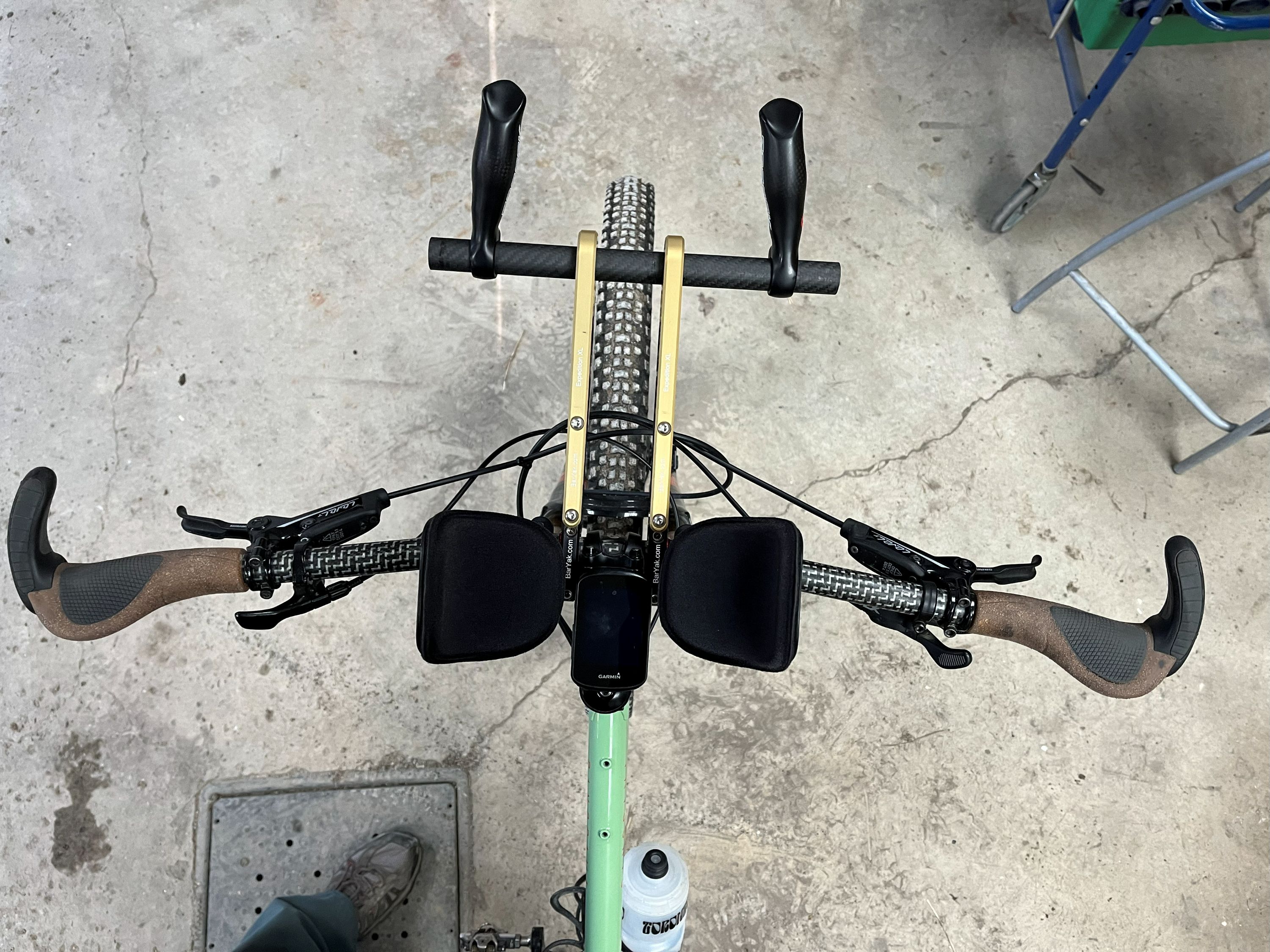
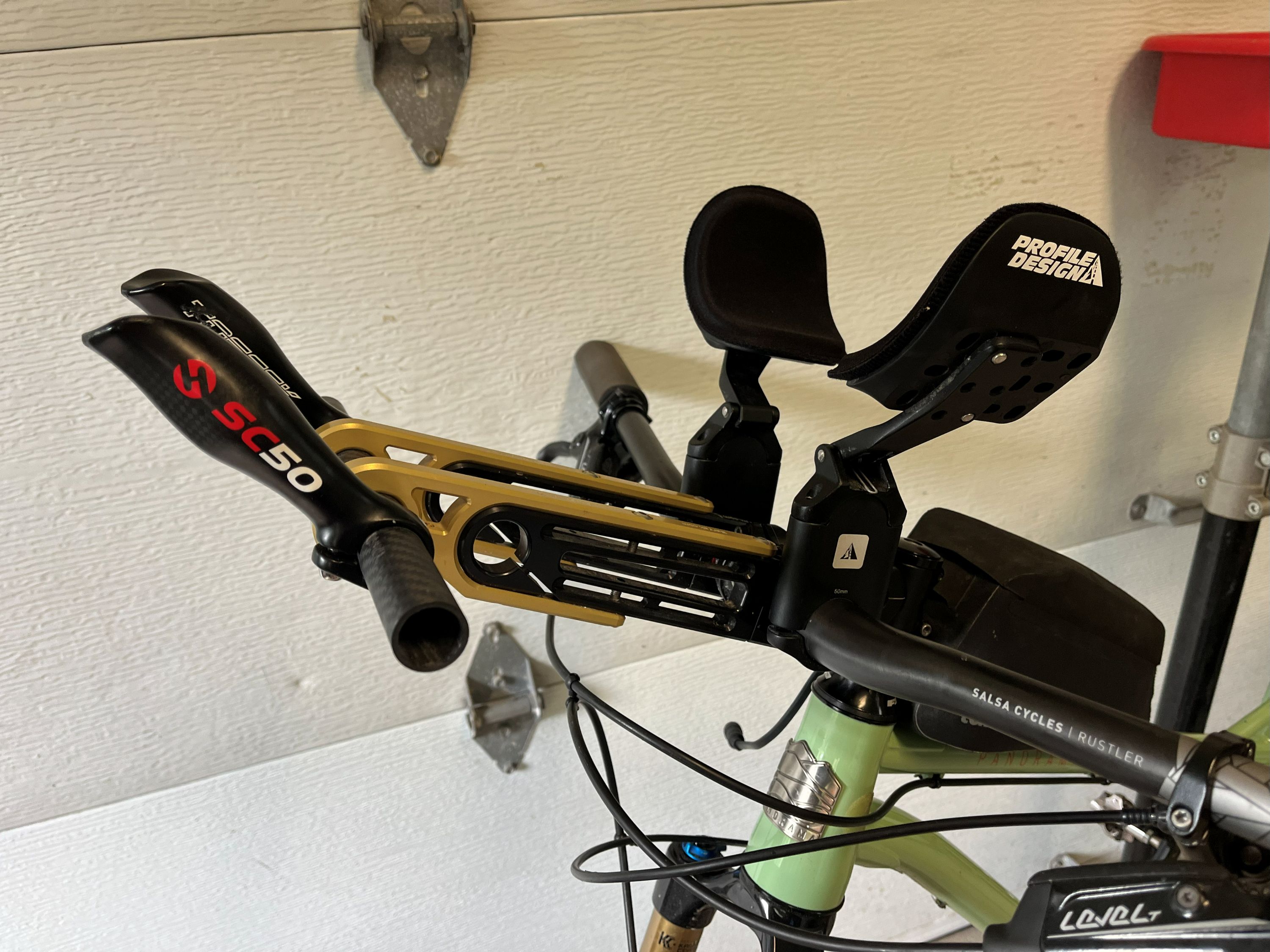
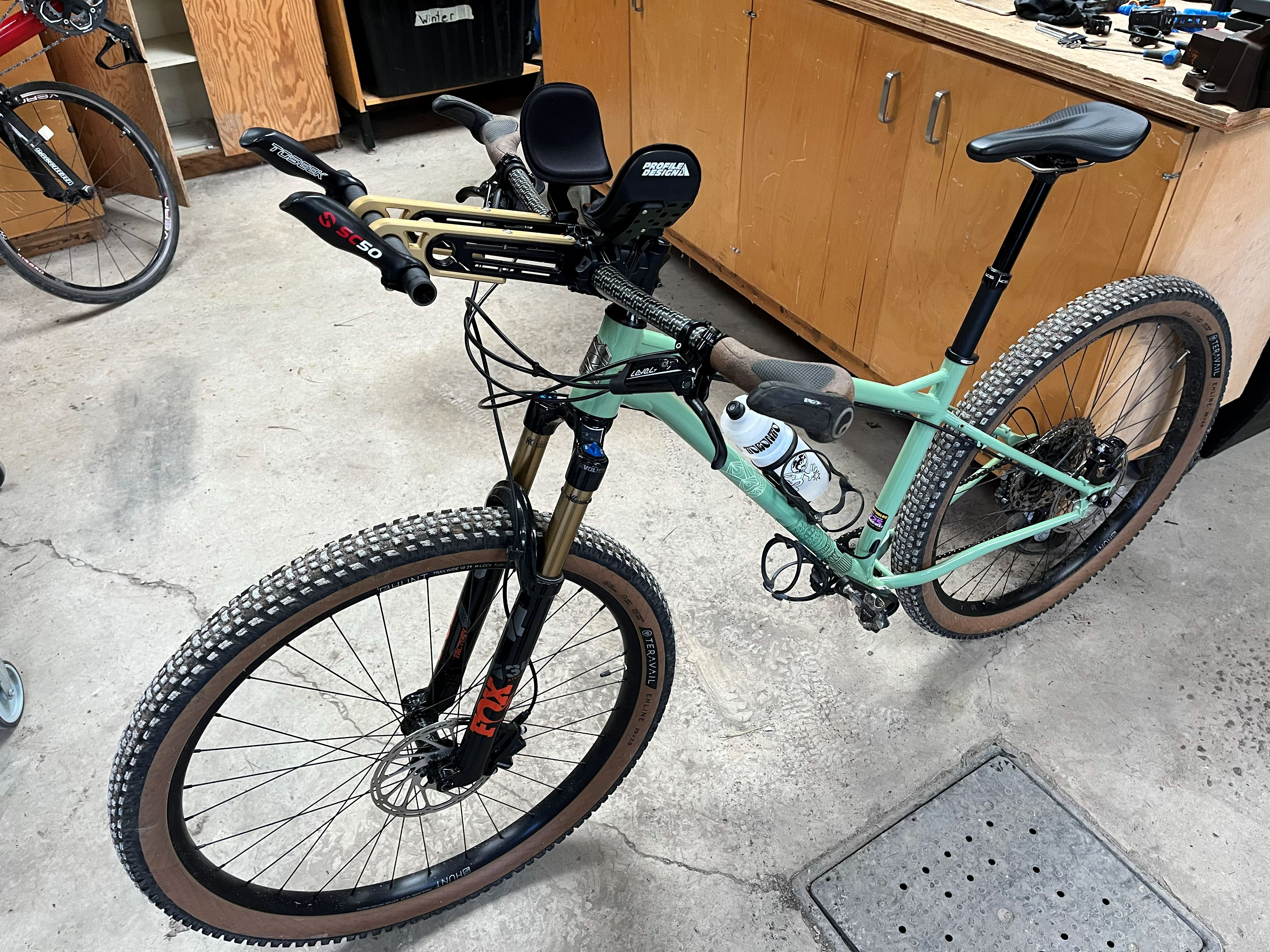
While there wasn’t a formal unboxing experience, the craftsmanship of the CNC-machined extensions immediately stood out. When I met the seller, each component was neatly packed in Ziploc bags of varying sizes, a simple but organized package. Back home, the setup was fairly intuitive. The aluminum rails are beautifully machined, featuring crisp Bar Yak engravings that give the system a sleek and strong feel.
Installation begins with the Expedition SL 35 rails, which mount to the handlebars using shims. The Expedition XL rails then slot over the top, and a carbon fiber crossbar threads through the ends of the XL add-on to complete the structure. Assembly takes some time, and the Profile Design flip-up armrests do claim a fair bit of cockpit real estate. At first, dialing in a comfortable position proved frustrating. But after a few rides and some trial-and-error adjustments, I finally landed on a setup that felt dialed and ready for adventure.
It’s no surprise that the BarYak system looks fantastic, but what truly sets it apart is how radically it diverges from traditional aerobars and standard handlebar extenders. The Expedition SL is a CNC-machined, black anodized aluminum rail system crafted from 6061 T6 alloy, designed to fit 35 mm handlebars or 31.8 mm bars using the available shim kit. Each SL 35 rail weighs 136 grams and measures 8 inches in length. Adding the Expedition XL extension grants an extra 2 inches of length, creating additional space for armrest integration. The XL rails come in a sleek, gold anodized finish and add just 101 grams per rail.
While the Profile Design flip-up armrests work well with drop bar setups, keeping access to the tops, I ultimately upgraded to the BarYak Peregrine Armrest Modular System as part of my 2025 cockpit refresh. Measuring 7 inches wide and weighing 214 grams, these armrests blend carbon fiber, plastic, and EVA foam to effectively dampen trail chatter. A clever design detail: a small piece of high-density foam on the underside allows the armrests to rest against the handlebars under load. This not only reduces weight and enhances responsiveness over rough terrain but also adds a layer of shock absorption when hitting ruts or washboard.
To complete the cockpit, I followed Joe from BarYak’s advice and added a second carbon fiber crossbar, bringing the total to two. Each bar measures 11 inches and weighs just 55 grams. The rear crossbar supports my harness, while the shortened forward bar is outfitted with Toseek carbon bar ends. I also installed the BarYak Triple Crown, a 50-gram mount that accommodates both my Coros Dura bike computer and Quad Lock-enabled phone.
The full aerobar setup weighs in at 992 grams. For comparison, my Redshift Sports Switch Aero System weighs 640 grams, and the Profile Design system I previously used comes in at 627 grams. However, those configurations didn’t include accessory mounts or a second crossbar, components that add 143 grams to the Bar Yak build, bringing the adjusted weight to 849 grams. That’s just over 200 grams heavier than a typical aerobar system, but the added functionality and modularity more than justify the difference.
To round out the build, I incorporated the Expedition Harness and Talon 16-liter waterproof bag. The harness integrates seamlessly with the Expedition rails and is made from Challenge Sailcloth 800 Ultra, a fabric renowned for its strength-to-weight ratio. The MagLock buckles are a standout feature, as they snap securely into place using powerful magnets and require an upward tilt to release, enhancing security under load. To future-proof the setup, I had clips sewn in for the Revelate Designs Egress Pocket and chose the larger 16-liter Talon bag with dual openings. Like the harness, it’s constructed from Challenge Sailcloth with taped seams for a fully waterproof solution.
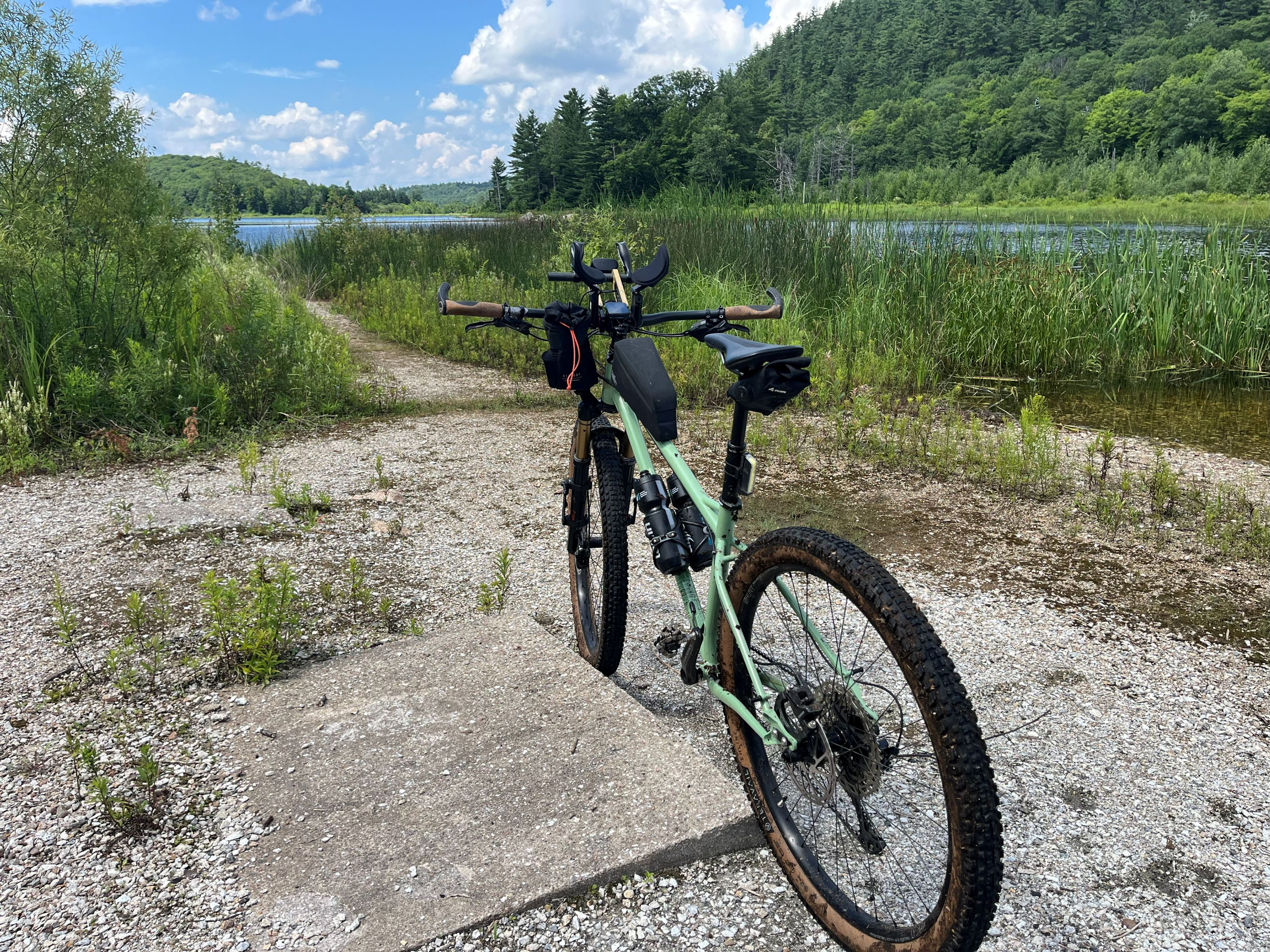
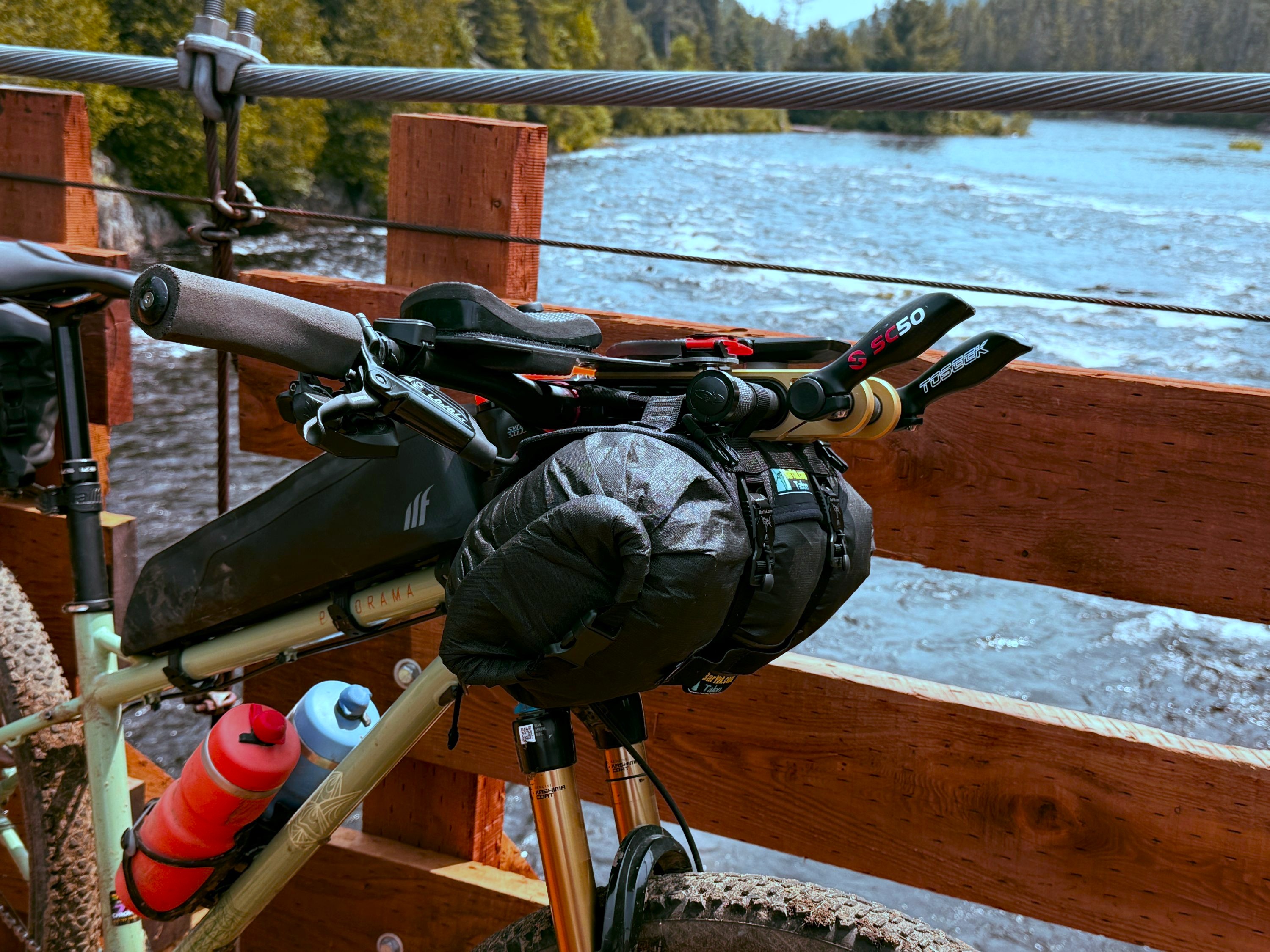
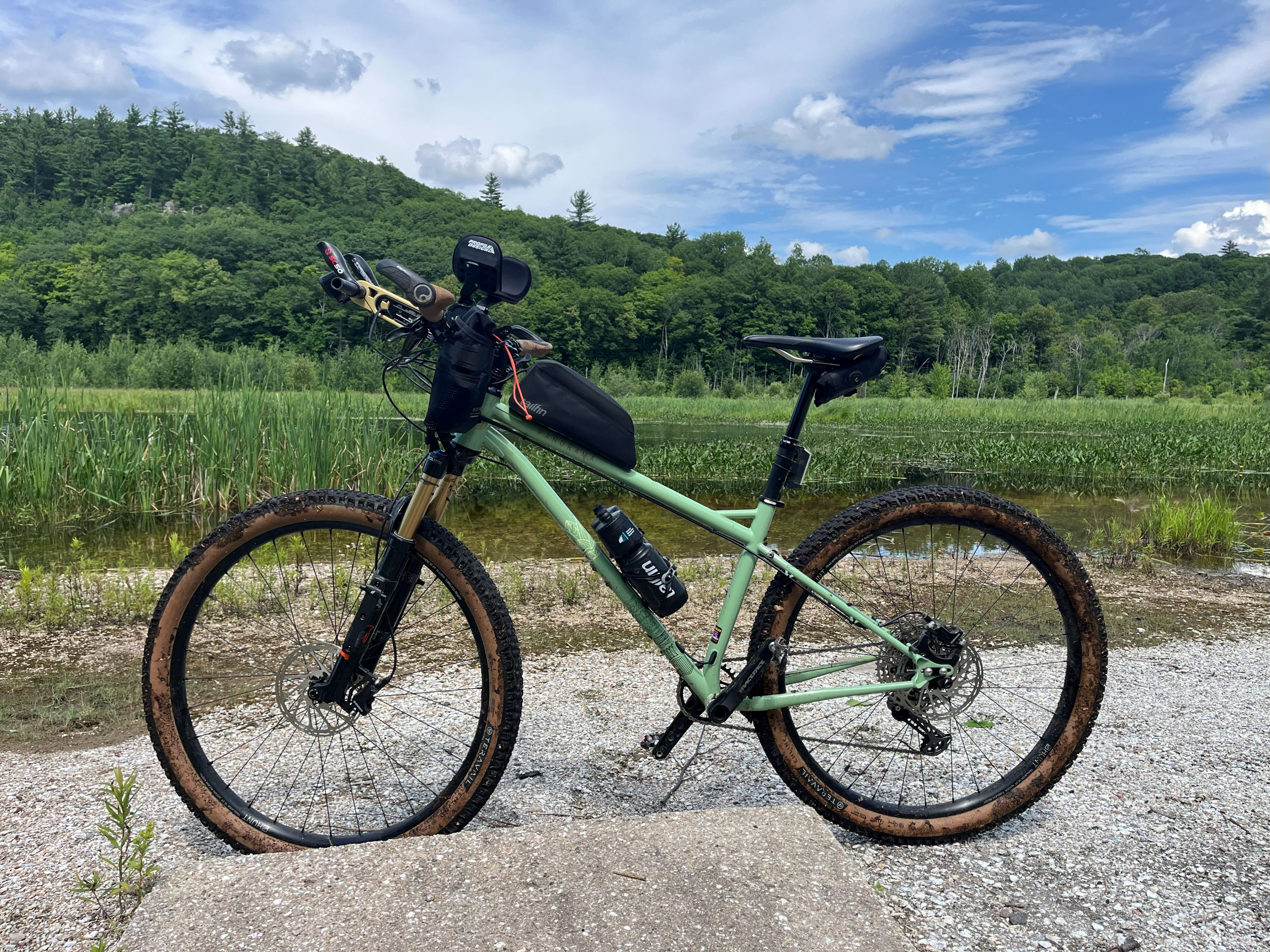
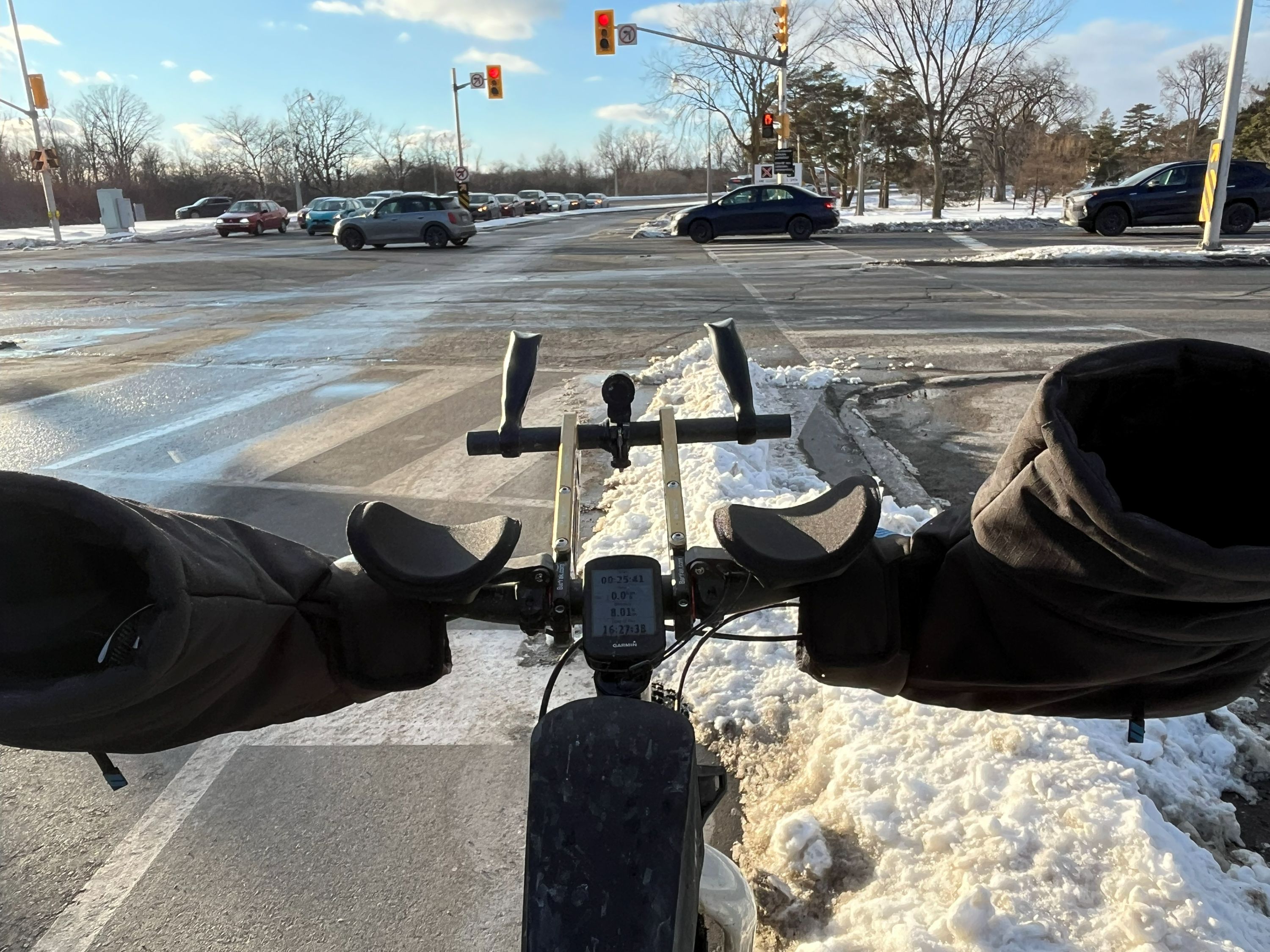
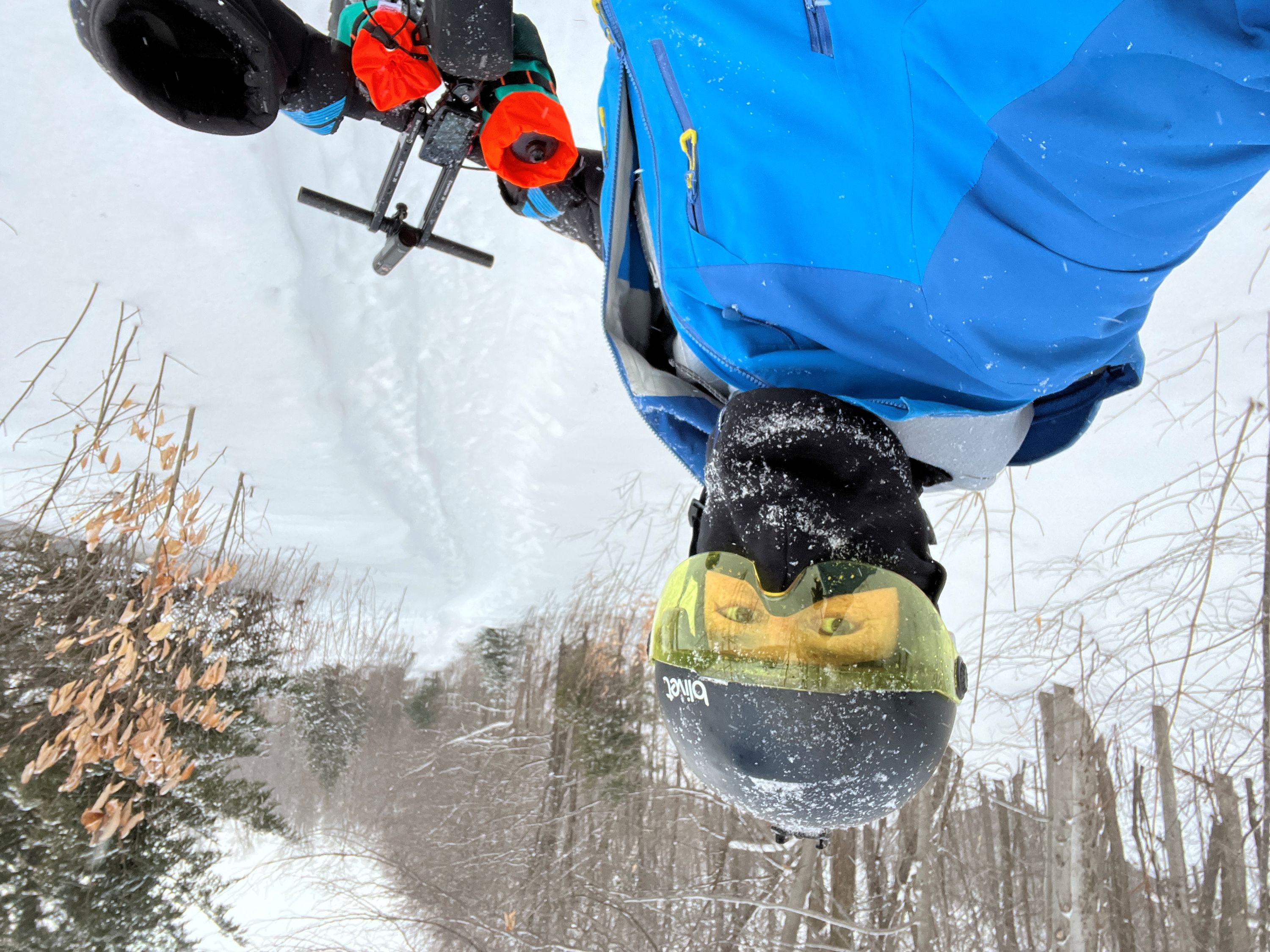
I first installed the BarYak Handlebar System on my mountain bike in 2023, initially pairing it with the Profile Design Flip-Up Armrests. While functional, I struggled to find a truly comfortable position and eventually removed them to reassess my setup.
In the winter of 2024, I repurposed the Expedition SL 35 rails for my fatbike to create tire clearance for a Calad Handlebar Bag carrying my winter sleep kit. The solution worked brilliantly and remained on the fatbike for two full seasons. Not only did the rails keep the bag clear of cables, but they also allowed me to mount it higher, preventing tire rub and eliminating the need for a rear rack.
By early spring 2025, I reached out to Joe at BarYak to discuss comfort improvements. After an hour-long conversation, Joe generously offered to send a few components to round-out my setup. He shipped over the Expedition Harness, Talon Waterproof Bag, Triple Crown, an extra crossbar, Lock-On Bar End Caps, and the Peregrine Armrests. His advice was spot-on: raise the handlebars, widen the grip, and use the broader Peregrine Armrests to dial in a more ergonomic position.
Once everything was installed, the new setup felt natural. The Peregrine Armrests, wider than the flip-ups I’d previously used, allowed for better weight distribution and a more natural grip. The fact that I could spend extended time on the aerobars with minimal discomfort was a huge win for long-distance bikepacking.
The BarYak Triple Crown added a sleek touch to the cockpit, letting me mount my Coros Dura and iPhone side by side. Following Joe’s recommendation, I now tether every device. Having lost and broken three phones over the years, I take that advice seriously. The Triple Crown can be mounted forward, bridging the rails, or aft on a single rail. I’ve only used it as a bridge so far, and I love how clean and integrated it makes the cockpit look. It’s all part of a beautifully cohesive ecosystem.
My first major outing with the full Bar Yak setup was the Canadian Shield Grand Depart, following the Canadian Shield Bikepacking Summit. I rode the Canadian Shield 250, a beautiful route through the Outaouais region of Western Quebec. My gear was simple: an Outdoor Research Bivy Bag, Montbell down sleeping bag, and air mattress, all rolled and packed into the Talon Waterproof Bag. One standout feature of the Talon is how easily my bedroll slides in, thanks to the low-friction Challenge Sailcloth material. Unlike TPU bags, it makes packing soft gear effortless.
Next came an overnighter with my buddy Carl on a short but demanding route called Ouareau Calling. Key requirements: a waterproof sleep system, stable front end, and a mountain bike with front suspension. I brought my small tent, knowing I might need to strap it externally if it got wet. Fortunately, the Talon bag was just large enough to fit it inside, and the oversized retainer loops kept everything nice and tight. While the Expedition XL and Peregrine Armrests weren’t essential for this trip, they made the gravel sections far more comfortable, especially since I couldn’t get as low on my Panorama Taiga MTB as Carl could on his drop-bar Taiga EXP.
The final big adventure of the year was a dogpacking overnighter with my 5-year-old Australian Cattle Dog, Indigo. After years of deliberation, I finally picked up a Frances Cycles Far Farer dog trailer and planned an overnighter, using a mix of MTB trails and rail trails. With the trailer eliminating any rear rack options, I had to carry nearly everything up front using the Bar Yak system and two 5-liter Tailfin Fork Packs. I skipped cooking gear and opted for takeaway from town, packing only my camp essentials. Once again, the Talon bag proved its worth, stable, secure, and barely shifting once clipped into the harness.
Before wrapping up, it’s worth noting one drawback of the BarYak system. Because the rails attach directly to the handlebars, using Flip-Up Armrests with spacers isn’t ideal. The rails must be angled significantly upward to achieve the correct plane, which shortens the distance between the armrests and bar ends, potentially compromising fit. The system is really optimized for setups at handlebar height. Joe often recommends pairing it with a 30-degree stem, such as the Redshift ShockStop, to elevate the cockpit and improve comfort.

After taking the time to truly dial in my setup, I can truly say I’m loving the BarYak Handlebar System. Building an effective cockpit is always a challenge, but Bar Yak simplifies many of the finer details that typically require trial and error. Once you’ve found your comfort zone on the rails, the next logical step is investing in the Expedition Harness and Talon Waterproof Bag. These components work in harmony and integrate seamlessly with the Expedition rails, creating a streamlined and highly functional front-end system.
Having tested both the Profile Design Flip-Up and Peregrine Armrests, I’m convinced that riders using flat bars or ultra-wide drop bars, like the Curve Walmer Bar or the Redshift Kitchen Sink Handlebar, will appreciate the added comfort and ergonomic support of the Peregrine setup. While the complete system is heavier than a traditional aerobar configuration, the BarYak ecosystem ties everything together into a cohesive, purpose-built package. The weight difference is modest, just a couple hundred grams more than standard aerobars, and well worth it for the added versatility, comfort, and integration.
After 3 years of use, in all types of riding conditions, including fatbiking, gravel biking and mountain biking, the BarYak ecosystem has really come through.
In 2023, Chris picked up a used BarYak Handlebar System. After 2 years of use, and a few upgrades, he's finally found it a full-time home on one of the bikes in his stable. Be sure to read the long-term review to get the full scoop.
After extensive testing across multiple bikes and seasons, the BarYak Handlebar System has proven to be a versatile, high-quality cockpit solution for serious bikepackers. The CNC-machined Expedition SL and XL rails offer sleek integration and cable clearance, while the modular setup, including the Peregrine Armrests, Triple Crown mount, and Talon Waterproof Bag, creates a cohesive ecosystem that balances comfort, stability, and gear accessibility. Though slightly heavier than traditional aerobars, the added functionality and ergonomic gains make it a worthwhile upgrade. Whether tackling winter fatbike expeditions, gravel overnighters, or dogpacking adventures, Bar Yak delivers a dialed-in front-end system that’s built for real-world endurance.
Over the years, I’ve experimented with countless ways to mount bags to the front of my bike. I’ve also tested a range of aerobar setups on both gravel and mountain bikes, s-bend, l-bend, and a few purpose-built bags that were downright impressive. When I first encountered the BarYak system in 2022, I wasn’t sure what to make of it. Coming from a background in road cycling and triathlon, I had a hard time getting past its unconventional look, shaped by years of racing bias. But as I dug deeper into the product and the brand, I realized that what began as a clever solution for creating clearance between bags and cables had evolved into a modular system, complete with aerobar compatibility, device mounts, and harness options.
Fast forward to early 2023: I stumbled upon a full BarYak Handlebar System at a reasonable price. After a bit of negotiation, I jumped at the chance to finally put it to the test. I ended up with a box full of parts: the BarYak Expedition SL 35, Toseek carbon bar ends, the Expedition XL add-on, and Profile Design Flip-Up Adjustable Armrests. With all the pieces in hand, the next challenge was figuring out how to bring it all together into a cohesive, functional cockpit.
BarYak is a veteran-owned bikepacking gear company founded in 2012 by adventure racers Joe and Tina Stiller, who set out to solve a persistent problem in the bikepacking world: handlebar bags and systems that compromised braking and shifting performance. Drawing on their deep experience in ultra-endurance racing and guided bikepacking tours, they engineered a modular system that prioritizes both functionality and freedom of movement. The result is a lineup of precision-crafted carrying solutions that allow riders to mount gear without interfering with cables or cockpit ergonomics, ideal for long-distance touring, gravel racing, and expedition-style adventures.
At the heart of BarYak’s offerings is the Bar Yak Expedition System, a lightweight and rugged handlebar-mounted platform that integrates seamlessly with harnesses, dry bags, and armrest systems. Their cockpit solutions, such as the Ultra and Pronghorn series, are designed to support aero positioning while carrying gear, making them especially popular among endurance racers and bikepackers tackling multi-day routes. Bar Yak also produces fork-mounted cargo cages, custom brackets, and accessories that expand packing capacity without sacrificing bike handling. Proudly engineered and fabricated in the USA, Bar Yak’s gear reflects a commitment to durability, innovation, and the spirit of adventure
While there wasn’t a formal unboxing experience, the craftsmanship of the CNC-machined extensions immediately stood out. When I met the seller, each component was neatly packed in Ziploc bags of varying sizes, a simple but organized package. Back home, the setup was fairly intuitive. The aluminum rails are beautifully machined, featuring crisp Bar Yak engravings that give the system a sleek and strong feel.
Installation begins with the Expedition SL 35 rails, which mount to the handlebars using shims. The Expedition XL rails then slot over the top, and a carbon fiber crossbar threads through the ends of the XL add-on to complete the structure. Assembly takes some time, and the Profile Design flip-up armrests do claim a fair bit of cockpit real estate. At first, dialing in a comfortable position proved frustrating. But after a few rides and some trial-and-error adjustments, I finally landed on a setup that felt dialed and ready for adventure.
It’s no surprise that the BarYak system looks fantastic, but what truly sets it apart is how radically it diverges from traditional aerobars and standard handlebar extenders. The Expedition SL is a CNC-machined, black anodized aluminum rail system crafted from 6061 T6 alloy, designed to fit 35 mm handlebars or 31.8 mm bars using the available shim kit. Each SL 35 rail weighs 136 grams and measures 8 inches in length. Adding the Expedition XL extension grants an extra 2 inches of length, creating additional space for armrest integration. The XL rails come in a sleek, gold anodized finish and add just 101 grams per rail.
While the Profile Design flip-up armrests work well with drop bar setups, keeping access to the tops, I ultimately upgraded to the BarYak Peregrine Armrest Modular System as part of my 2025 cockpit refresh. Measuring 7 inches wide and weighing 214 grams, these armrests blend carbon fiber, plastic, and EVA foam to effectively dampen trail chatter. A clever design detail: a small piece of high-density foam on the underside allows the armrests to rest against the handlebars under load. This not only reduces weight and enhances responsiveness over rough terrain but also adds a layer of shock absorption when hitting ruts or washboard.
To complete the cockpit, I followed Joe from BarYak’s advice and added a second carbon fiber crossbar, bringing the total to two. Each bar measures 11 inches and weighs just 55 grams. The rear crossbar supports my harness, while the shortened forward bar is outfitted with Toseek carbon bar ends. I also installed the BarYak Triple Crown, a 50-gram mount that accommodates both my Coros Dura bike computer and Quad Lock-enabled phone.
The full aerobar setup weighs in at 992 grams. For comparison, my Redshift Sports Switch Aero System weighs 640 grams, and the Profile Design system I previously used comes in at 627 grams. However, those configurations didn’t include accessory mounts or a second crossbar, components that add 143 grams to the Bar Yak build, bringing the adjusted weight to 849 grams. That’s just over 200 grams heavier than a typical aerobar system, but the added functionality and modularity more than justify the difference.
To round out the build, I incorporated the Expedition Harness and Talon 16-liter waterproof bag. The harness integrates seamlessly with the Expedition rails and is made from Challenge Sailcloth 800 Ultra, a fabric renowned for its strength-to-weight ratio. The MagLock buckles are a standout feature, as they snap securely into place using powerful magnets and require an upward tilt to release, enhancing security under load. To future-proof the setup, I had clips sewn in for the Revelate Designs Egress Pocket and chose the larger 16-liter Talon bag with dual openings. Like the harness, it’s constructed from Challenge Sailcloth with taped seams for a fully waterproof solution.
I first installed the BarYak Handlebar System on my mountain bike in 2023, initially pairing it with the Profile Design Flip-Up Armrests. While functional, I struggled to find a truly comfortable position and eventually removed them to reassess my setup.
In the winter of 2024, I repurposed the Expedition SL 35 rails for my fatbike to create tire clearance for a Calad Handlebar Bag carrying my winter sleep kit. The solution worked brilliantly and remained on the fatbike for two full seasons. Not only did the rails keep the bag clear of cables, but they also allowed me to mount it higher, preventing tire rub and eliminating the need for a rear rack.
By early spring 2025, I reached out to Joe at BarYak to discuss comfort improvements. After an hour-long conversation, Joe generously offered to send a few components to round-out my setup. He shipped over the Expedition Harness, Talon Waterproof Bag, Triple Crown, an extra crossbar, Lock-On Bar End Caps, and the Peregrine Armrests. His advice was spot-on: raise the handlebars, widen the grip, and use the broader Peregrine Armrests to dial in a more ergonomic position.
Once everything was installed, the new setup felt natural. The Peregrine Armrests, wider than the flip-ups I’d previously used, allowed for better weight distribution and a more natural grip. The fact that I could spend extended time on the aerobars with minimal discomfort was a huge win for long-distance bikepacking.
The BarYak Triple Crown added a sleek touch to the cockpit, letting me mount my Coros Dura and iPhone side by side. Following Joe’s recommendation, I now tether every device. Having lost and broken three phones over the years, I take that advice seriously. The Triple Crown can be mounted forward, bridging the rails, or aft on a single rail. I’ve only used it as a bridge so far, and I love how clean and integrated it makes the cockpit look. It’s all part of a beautifully cohesive ecosystem.
My first major outing with the full Bar Yak setup was the Canadian Shield Grand Depart, following the Canadian Shield Bikepacking Summit. I rode the Canadian Shield 250, a beautiful route through the Outaouais region of Western Quebec. My gear was simple: an Outdoor Research Bivy Bag, Montbell down sleeping bag, and air mattress, all rolled and packed into the Talon Waterproof Bag. One standout feature of the Talon is how easily my bedroll slides in, thanks to the low-friction Challenge Sailcloth material. Unlike TPU bags, it makes packing soft gear effortless.
Next came an overnighter with my buddy Carl on a short but demanding route called Ouareau Calling. Key requirements: a waterproof sleep system, stable front end, and a mountain bike with front suspension. I brought my small tent, knowing I might need to strap it externally if it got wet. Fortunately, the Talon bag was just large enough to fit it inside, and the oversized retainer loops kept everything nice and tight. While the Expedition XL and Peregrine Armrests weren’t essential for this trip, they made the gravel sections far more comfortable, especially since I couldn’t get as low on my Panorama Taiga MTB as Carl could on his drop-bar Taiga EXP.
The final big adventure of the year was a dogpacking overnighter with my 5-year-old Australian Cattle Dog, Indigo. After years of deliberation, I finally picked up a Frances Cycles Far Farer dog trailer and planned an overnighter, using a mix of MTB trails and rail trails. With the trailer eliminating any rear rack options, I had to carry nearly everything up front using the Bar Yak system and two 5-liter Tailfin Fork Packs. I skipped cooking gear and opted for takeaway from town, packing only my camp essentials. Once again, the Talon bag proved its worth, stable, secure, and barely shifting once clipped into the harness.
Before wrapping up, it’s worth noting one drawback of the BarYak system. Because the rails attach directly to the handlebars, using Flip-Up Armrests with spacers isn’t ideal. The rails must be angled significantly upward to achieve the correct plane, which shortens the distance between the armrests and bar ends, potentially compromising fit. The system is really optimized for setups at handlebar height. Joe often recommends pairing it with a 30-degree stem, such as the Redshift ShockStop, to elevate the cockpit and improve comfort.
After taking the time to truly dial in my setup, I can truly say I’m loving the BarYak Handlebar System. Building an effective cockpit is always a challenge, but Bar Yak simplifies many of the finer details that typically require trial and error. Once you’ve found your comfort zone on the rails, the next logical step is investing in the Expedition Harness and Talon Waterproof Bag. These components work in harmony and integrate seamlessly with the Expedition rails, creating a streamlined and highly functional front-end system.
Having tested both the Profile Design Flip-Up and Peregrine Armrests, I’m convinced that riders using flat bars or ultra-wide drop bars, like the Curve Walmer Bar or the Redshift Kitchen Sink Handlebar, will appreciate the added comfort and ergonomic support of the Peregrine setup. While the complete system is heavier than a traditional aerobar configuration, the BarYak ecosystem ties everything together into a cohesive, purpose-built package. The weight difference is modest, just a couple hundred grams more than standard aerobars, and well worth it for the added versatility, comfort, and integration.
After 3 years of use, in all types of riding conditions, including fatbiking, gravel biking and mountain biking, the BarYak ecosystem has really come through.